

TEN10: Ένα wine bar με ιδιαίτερη αρχιτεκτονική άποψη στον Πύργο Ηλείας
8 Μαρτίου 2021
Μέγιστη ευκολία και άνεση με τα υπερσύγχρονα CLOi ρομπότ της LG Electronics
9 Μαρτίου 2021
Domus Ariadne: Ένα μπουτίκ ξενοδοχείο στην Κρήτη που μοιάζει με σύγχρονο art deco στολίδι
Στην καρδιά του ιστορικού κέντρου, εντός των ενετικών τειχών, στο Ηράκλειο της Κρήτης, βρίσκεται τo Domus Ariadne, ένα boutique hotel. Πρόκειται για τριώροφη αστική κατοικία, που ξανακτίστηκε το 1946, μετά την καταστροφή της, από βόμβα του Β’ παγκοσμίου πολέμου και τις τελευταίες δεκαετίες λειτουργούσε ως αρχιτεκτονικό γραφείο.
Ο βασικός στόχος της νέας μελέτης, από το γραφείο A2G Architects, ήταν ο σεβασμός του χαρακτήρα του κτιρίου, παράλληλα με την δημιουργία μιας ταυτότητας για το αστικό ξενοδοχείο. Ο βασικός σκελετός του κτιρίου και η θέση των ανοιγμάτων έμειναν τα ίδια, ενώ το εσωτερικό επηρεάστηκε από το έργο του Ιταλού ζωγράφου Giorgio De Chirico.

Αρχιτεκτονικό γραφείο: A2G Architects, Photo © Γιώργος Σφακιανάκης
Αρχιτεκτονικό γραφείο: A2G Architects, Photo © Γιώργος Σφακιανάκης
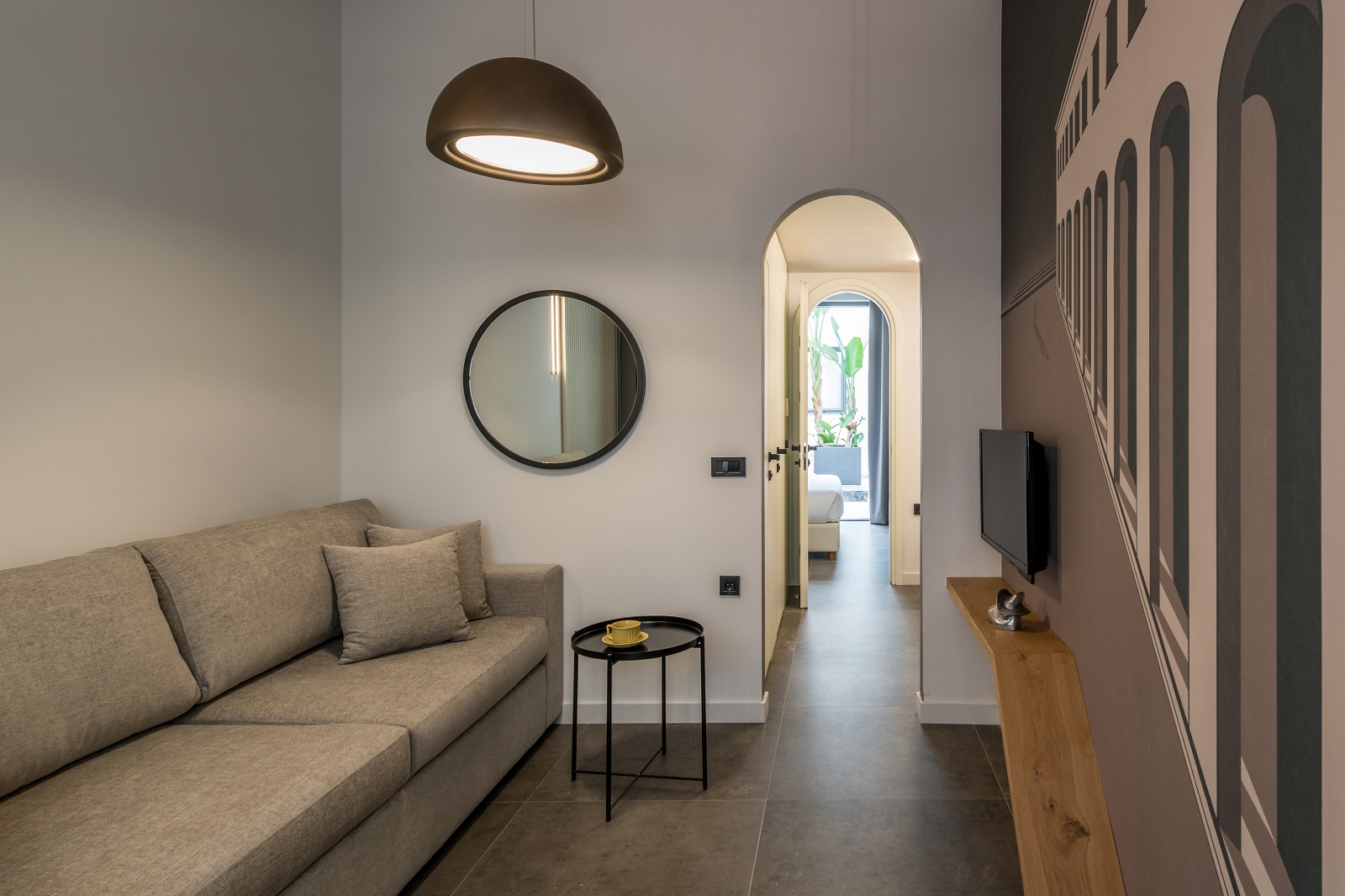
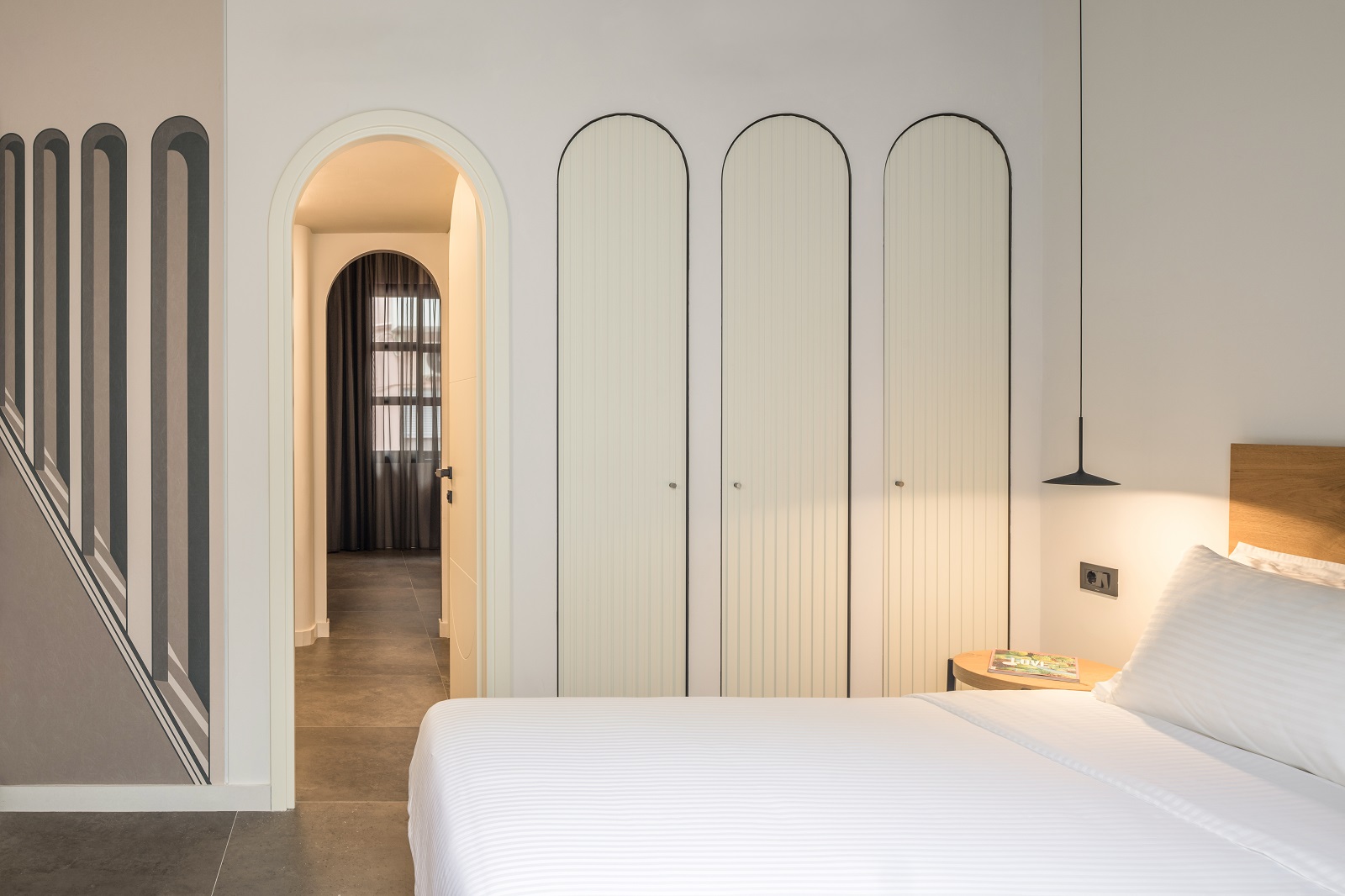
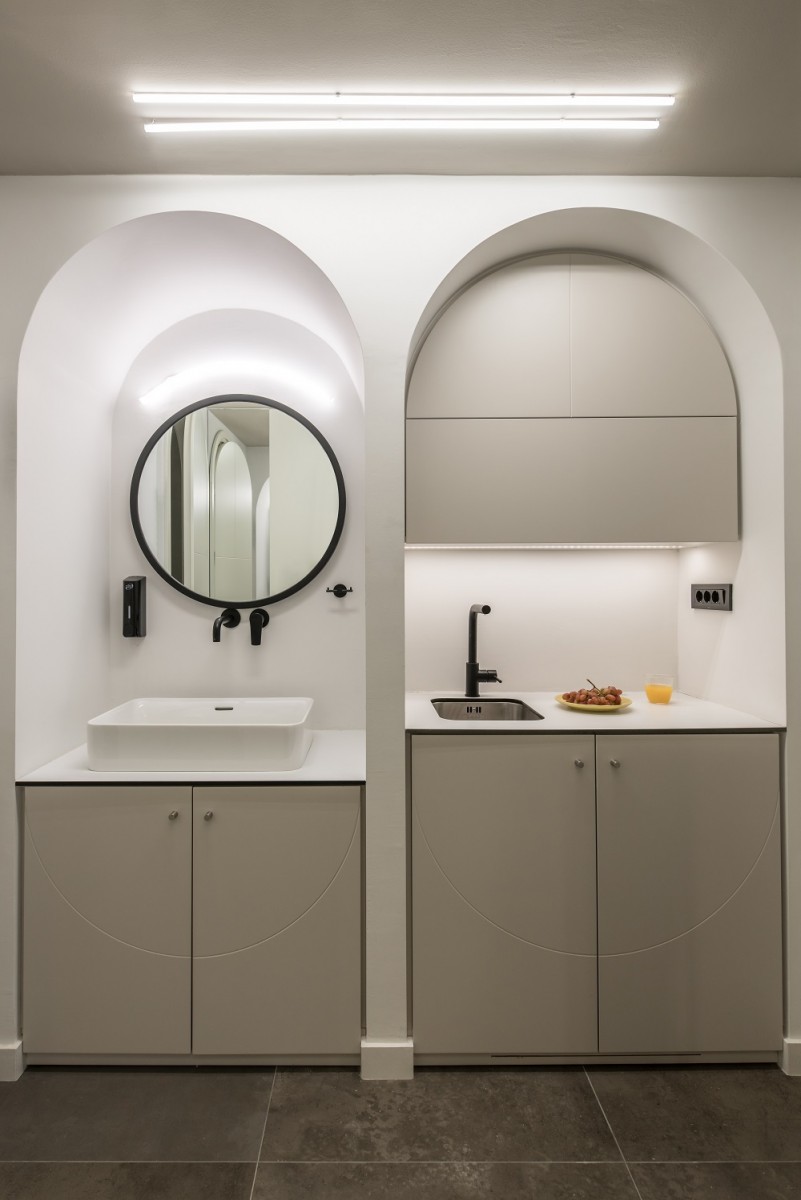
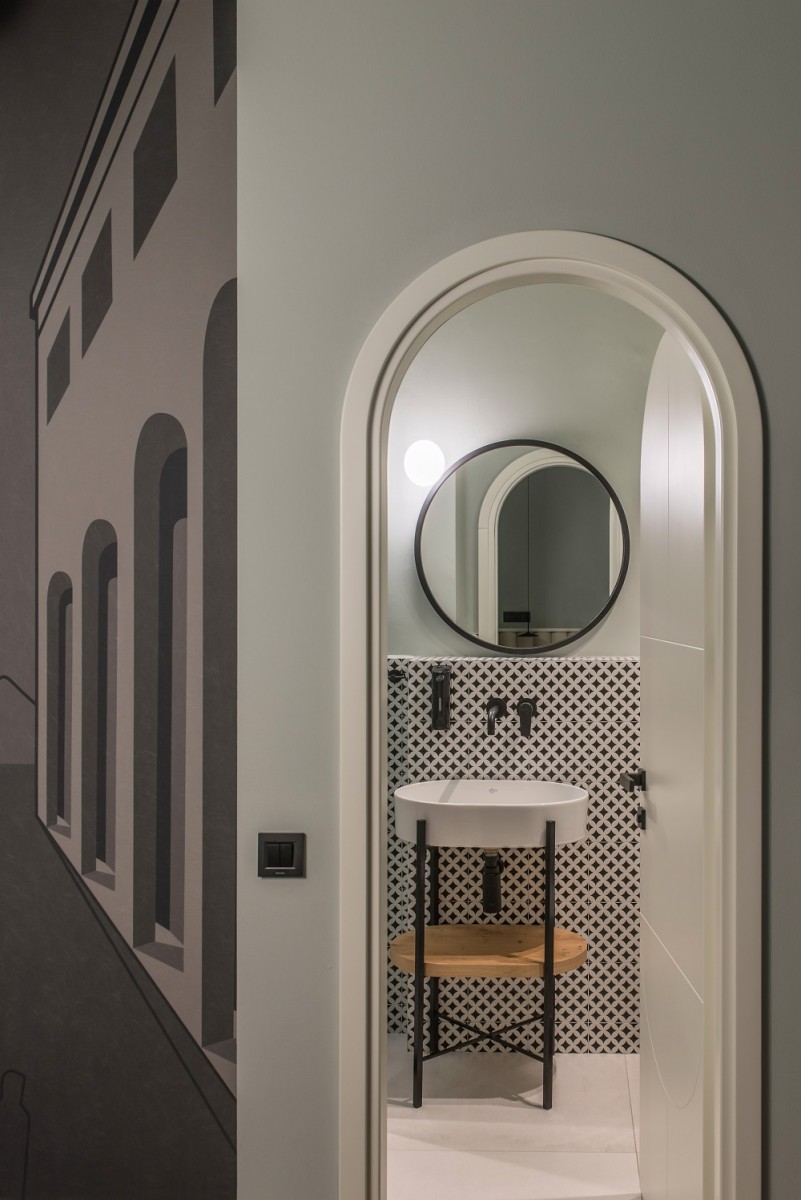
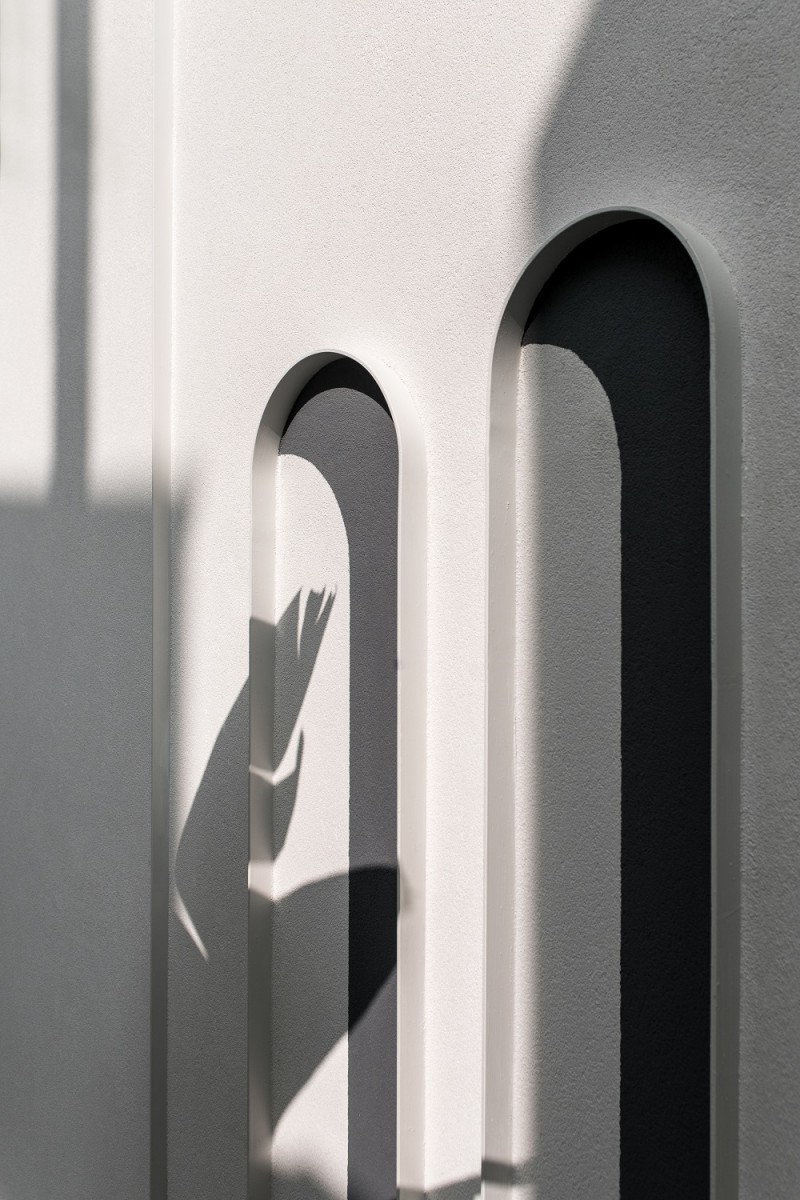
Η χρήση της καμάρας προέρχεται από τους πίνακες του de Chirico και είναι κυρίαρχη μορφή που εμφανίζεται σε πόρτες, κιγκλιδώματα, ντουλάπες κλπ. Χρησιμοποιώντας καμάρες και την προοπτική, δημιουργούνται οπτικές ψευδαισθήσεις που «μεγαλώνουν το χώρο». Κάθε δωμάτιο έχει δική του χρωματική παλέτα χωρίς όμως αυτό να διαταράσσει το ενιαίο ύφος του έργου.
Αρχιτεκτονικό γραφείο: A2G Architects, Photo © Γιώργος Σφακιανάκης
Αρχιτεκτονικό γραφείο: A2G Architects, Photo © Γιώργος Σφακιανάκης
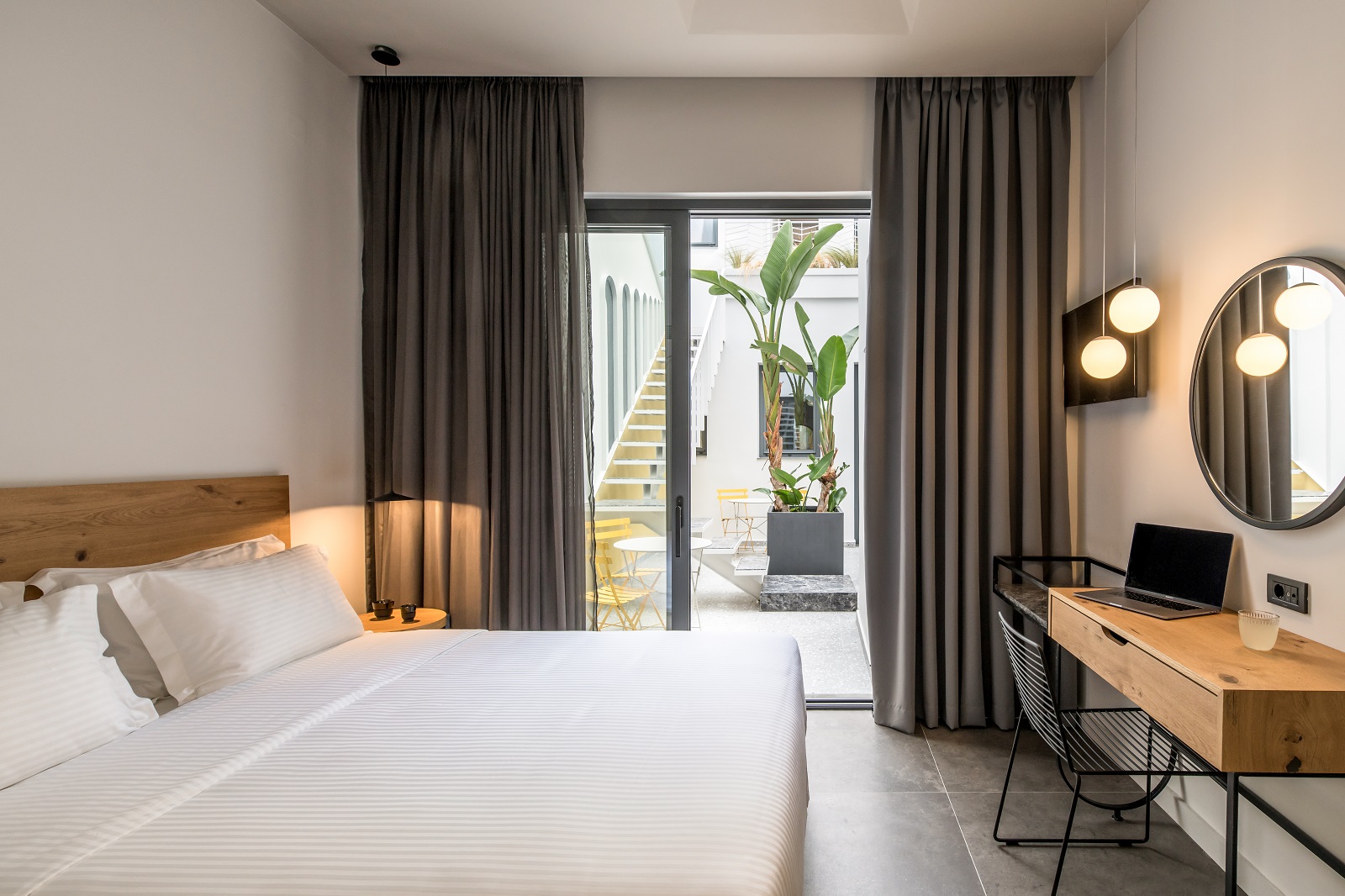
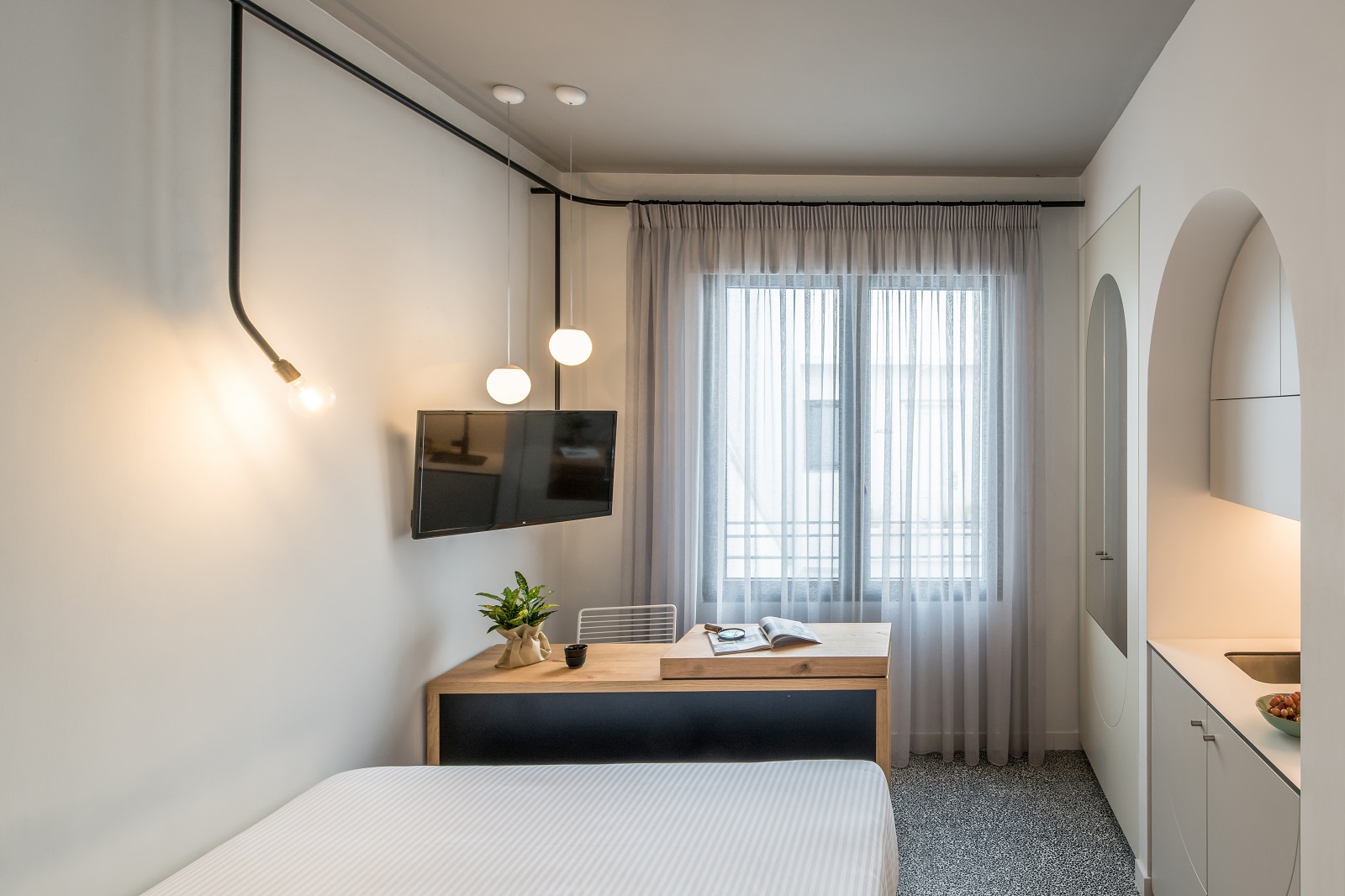
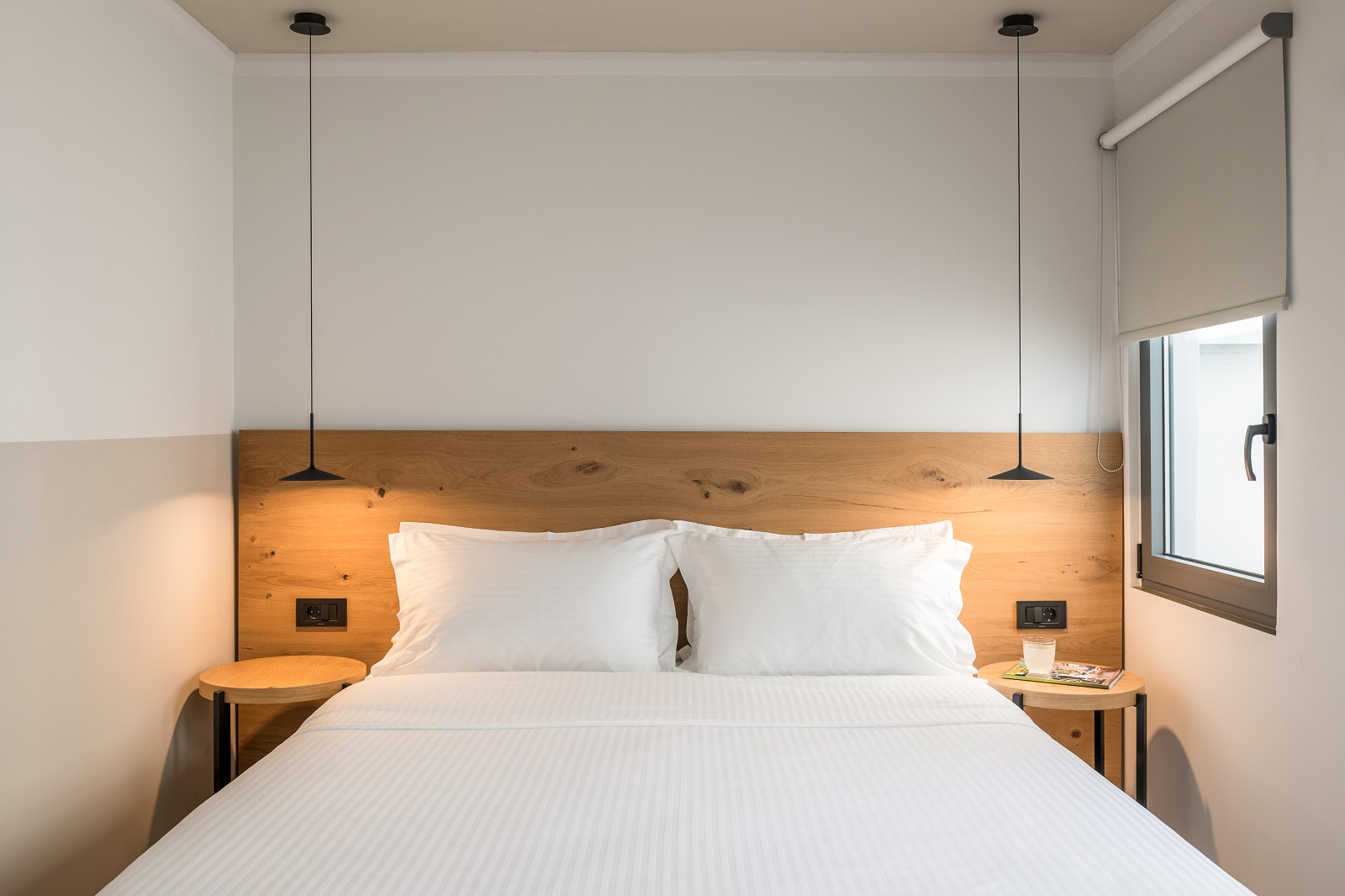
“Η κύρια πρόκληση του έργου για τους αρχιτέκτονες, έγκειται στην μέγιστη αξιοποίηση των μικρών χώρων των δωματίων”.
Αρχιτεκτονικό γραφείο: A2G Architects, Photo © Γιώργος Σφακιανάκης
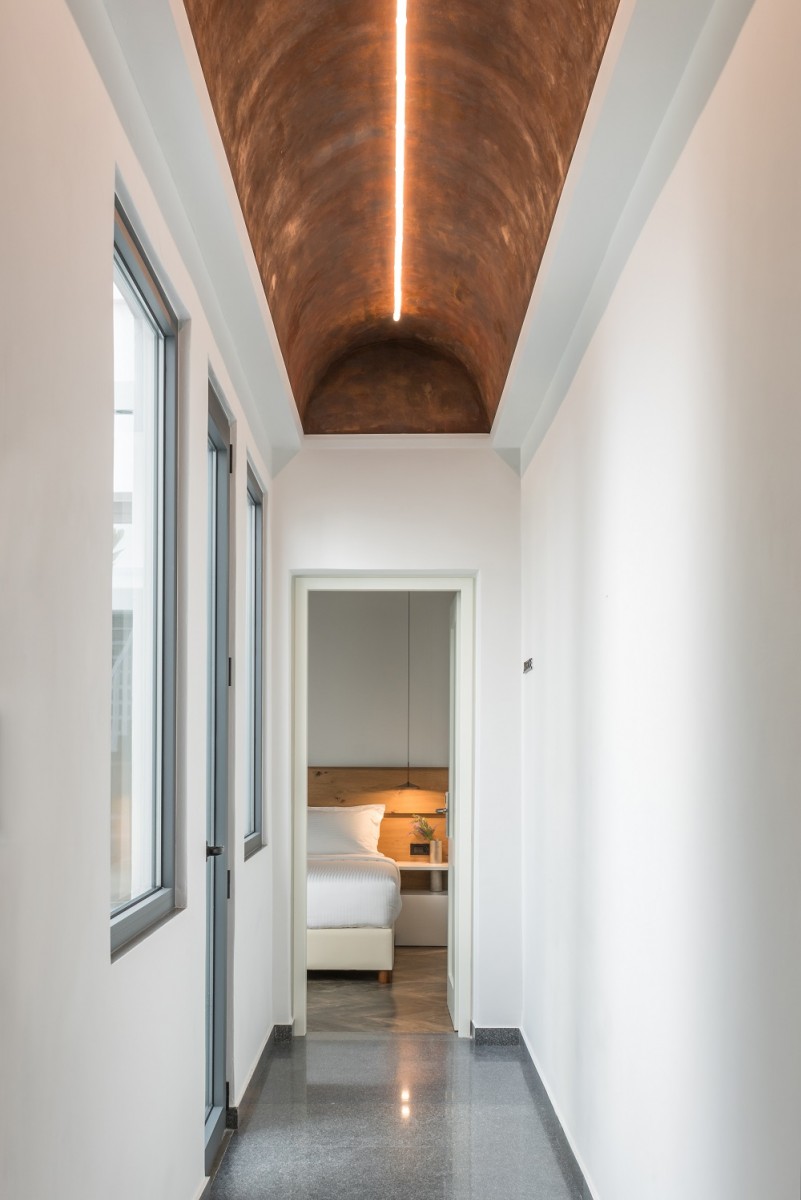
Σχεδιάζονται με λεπτομέρεια όλα τα δωμάτια, από απλή διαρρύθμιση χώρων μέχρι σχεδιασμό επίπλων. Υπάρχουν πέντε δίκλινα υπνοδωμάτια που έχουν πρόσοψη στο δρόμο ή θέα στο αίθριο και μία διαμπερή σουίτα με πρόσοψη και εκτόνωση στο αίθριο.

Αρχιτεκτονικό γραφείο: A2G Architects, Photo © Γιώργος Σφακιανάκης
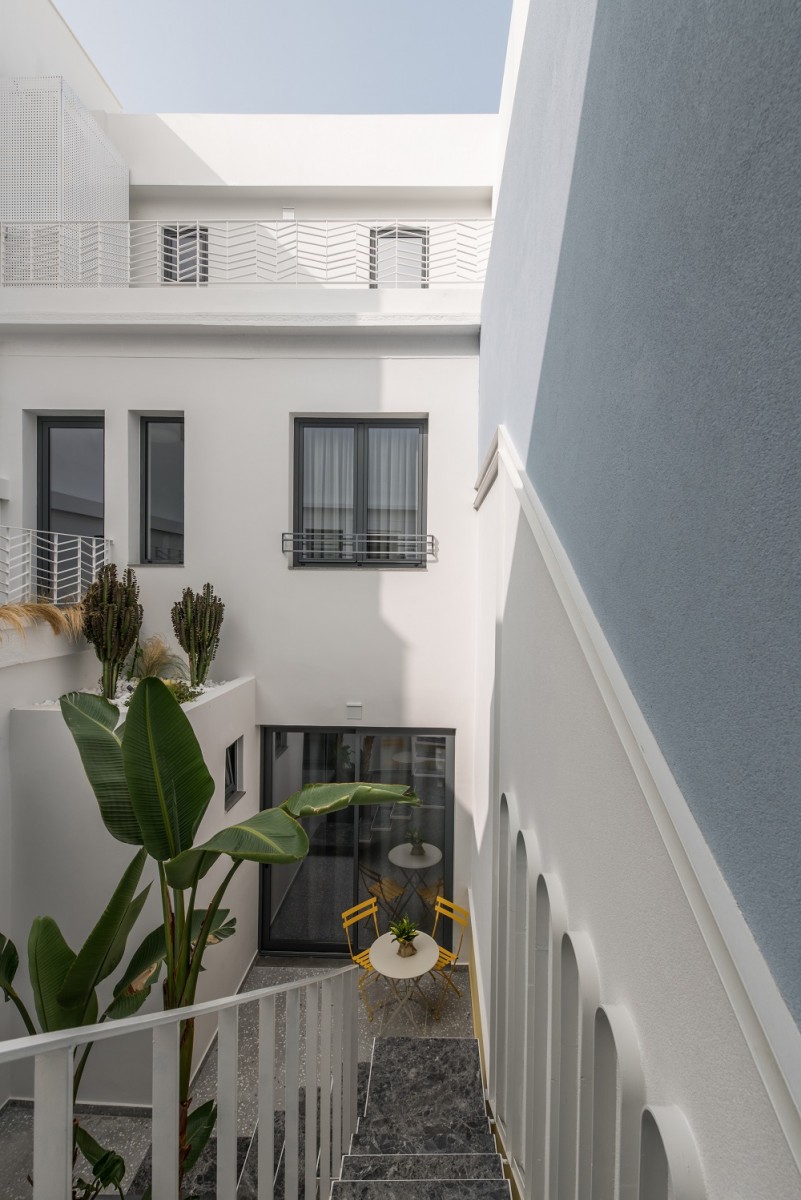
“Το κεντρικό αίθριο αποτελεί και το σημείο αναφοράς του έργου”.
Αρχιτεκτονικό γραφείο: A2G Architects, Photo © Γιώργος Σφακιανάκης
Είναι απόρροια της αρχαίας ρωμαϊκής τυπολογίας «Domus», από την οποία προήλθε και η ονομασία του ξενοδοχείου. Εκτός από φυσικό φωτισμό, προσφέρει στο κτίριο μία «έκπληξη».

Αρχιτεκτονικό γραφείο: A2G Architects, Photo © Γιώργος Σφακιανάκης
“Η σκάλα που οδηγεί στον όροφο αποτελεί συνθετικό στοιχείο για τον τυφλό τοίχο διασπώντας τον σε επίπεδα: γη, κτίριο, ουρανός”.
Αρχιτεκτονικό γραφείο: A2G Architects, Photo © Γιώργος Σφακιανάκης
Μεταλλικά στοιχεία ορίζουν τα διαφορετικά επίπεδα και τονίζουν τα αρχιτεκτονικά στοιχεία, το γείσο και τις καμάρες. Όταν φωτίζονται, είτε φυσικά είτε τεχνητά, δημιουργούν επιπλέον σκιές και πλέον δεν μιλάμε για διακόσμηση αλλά για σκηνογραφία.

Αρχιτεκτονικό γραφείο: A2G Architects, Photo © Γιώργος Σφακιανάκης
Το αίθριο αποτελεί μία όαση: η εσωστρέφεια του κτιρίου το προστατεύει από την κίνηση και τους θορύβους του κέντρου της πόλης. Ο σύγχρονος σχεδιασμός Art Deco συνάδει με τον αρχικό χαρακτήρα του κτιρίου και την πολιτιστική του ταυτότητα.

Αρχιτεκτονικό γραφείο: A2G Architects, Photo © Γιώργος Σφακιανάκης
Στοιχεία & Συντελεστές έργου:
Τίτλος έργου: Domus Ariadne, Τυπολογία: Μπουτίκ ξενοδοχείο, Τοποθεσία: Ηράκλειο Κρήτης – Ελλάδα, Κατασκευή έργου: Γαλετάκης Γιώργος – Γρηγοράκης Βαγγέλης, Αρχιτεκτονικό γραφείο: A2G Architects, Αρχιτέκτονας: Χατζηανδρέου Δήμητρα, Σχεδιαστική ομάδα Α2Γ: Ναυσικά Σταυρουλάκη, Στατική μελέτη: Domos Structural, H/M μελέτη: Μαρκουτσάκης Ιωάννης, Επίβλεψη έργου: Γαλετάκης Γιώργος – Δελήμπασης Γιάννης – Αθανασάκης Δημήτρης, Εμβαδόν: 215 τ.μ., Έτος: 2019 – 2020, Κατάσταση: Ολοκληρωμένο, Κείμενο παρουσίασης: A2G Architects, Φωτογραφίες: Γιώργος Σφακιανάκης
Προμηθευτές έργου:
Ξύλινες κατασκευές: The Art of Wood (Νυκτάρης Εμμανουήλ), Μεταλλικές κατασκευές: KostaKosta stoMetallo (Μακριδάκης Κωνσταντίνος), Δάπεδα – Επιστρώσεις: Agapitos tiles, Ψευδοροφές: KNAUF (Ραπούσης Γεώργιος), Μονώσεις: Μαρινάκης Γεώργιος, Επιχρίσματα – Βαφές – Κόλλες: Caparol (Μαραζάκη Άννη), Κουφώματα: ΤΕΧΝΑΛΟΥΜΙΝ Ε.Π.Ε. – ΠΕΡΣΕΜΑΤΗΣ Ε.Π.Ε, Κλιματισμός – Θέρμανση: Daikin (Ξενικάκης Ιωάννης), Υδραυλικά – Είδη υγιεινής: Υδρομετάλ (Ανυφαντάκης ΑΕΒΕ), Φωτισμός: Linea Light, Επίπλωση: Hay – Fermob, Ταπετσαρίες: Apolyto Creative Spot AE
English description: A mid-war era urban residence within the Venetian city walls, in the heart of Heraklion city, has been restored by A2G Architects, aiming to house Domus Ariadne, a unique boutique hotel.
It was re-built in 1946 after being almost completely destroyed during World War II bombings and functioned as an architect’s office for the past decades. The main objective was to respect the character of the building while also presenting a fresh idea for the urban hotel.
Architectural firm: A2G Architects, Photo © Giorgos Sfakianakis
Architecturally the main structure and openings stayed mostly the same and were restored while the interior design was influenced by the work of the Italian artist Giorgio de Chirico.

Architectural firm: A2G Architects, Photo © Giorgos Sfakianakis
“The use of the arch derives from de Chirico’s paintings. It is a dominant feature of the design appearing in doors, bannisters, cabinetry, etc”.
Architectural firm: A2G Architects, Photo © Giorgos Sfakianakis
In the 215 square meters building there is no space left untouched or unused, with alcove kitchens, multifunctional furniture and clever storage solutions like the ‘piano’ cupboard under the staircase. Toying with the perspective, as the artist does, also helped to make the spaces feel bigger.
Architectural firm: A2G Architects, Photo © Giorgos Sfakianakis
The six rooms of the hotel, that lead off a central atrium, all differ in plan form, character and color palette, presenting the visitor with a unique spatial and sensory experience. Each room features a different mural inspired by de Chirico that influences the materiality, furnishings and architectural expression within the space.

Architectural firm: A2G Architects, Photo © Giorgos Sfakianakis
“While all of them are different, they come together to form a continuous narrative within the restored residence”.
Architectural firm: A2G Architects, Photo © Giorgos Sfakianakis
The central atrium remains the main focus of the building, adhering simultaneously in the typology of the roman Domus, that inspired the hotel’s name, and the pre and mid war urban residence.
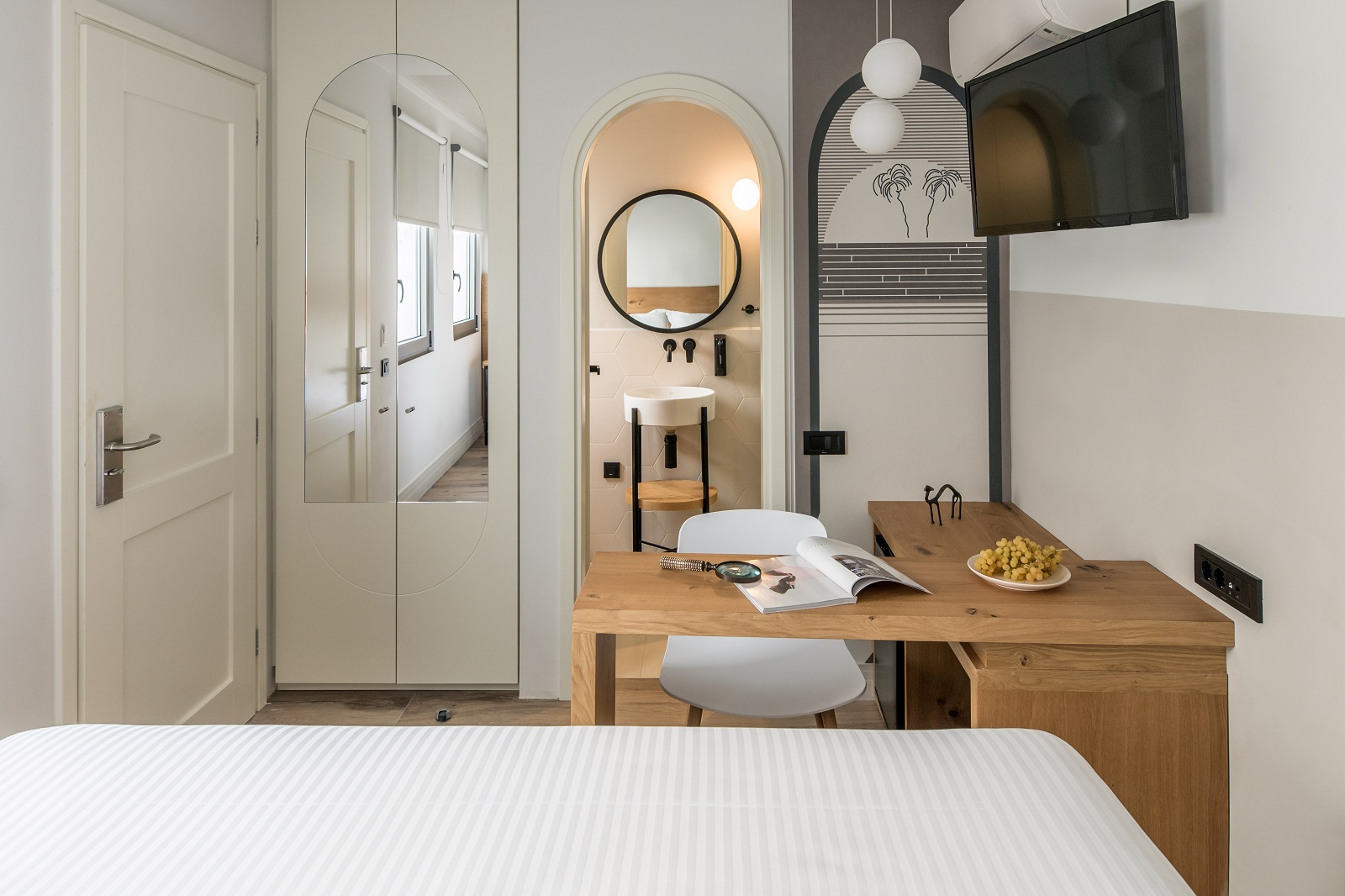
Architectural firm: A2G Architects, Photo © Giorgos Sfakianakis
Both typologies are limited in size, due to the confines of the city walls, but they both feature an internal courtyard or atrium which is surrounded by the communal and private spaces of the residence.
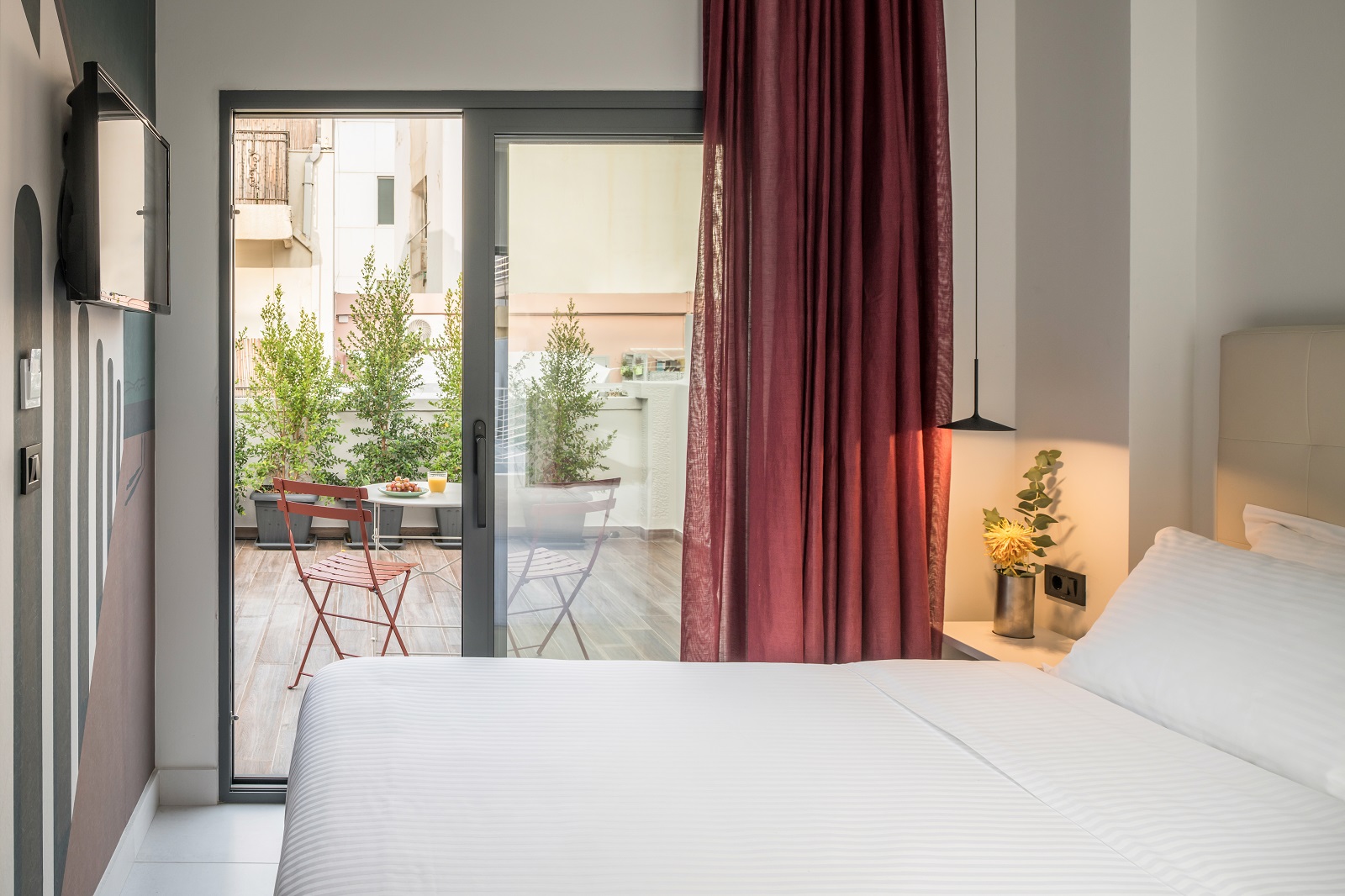
Architectural firm: A2G Architects, Photo © Giorgos Sfakianakis
“A protected oasis with an introverted feeling within the busy city was created by orientating the focal point of each hotel room towards the central atrium”.
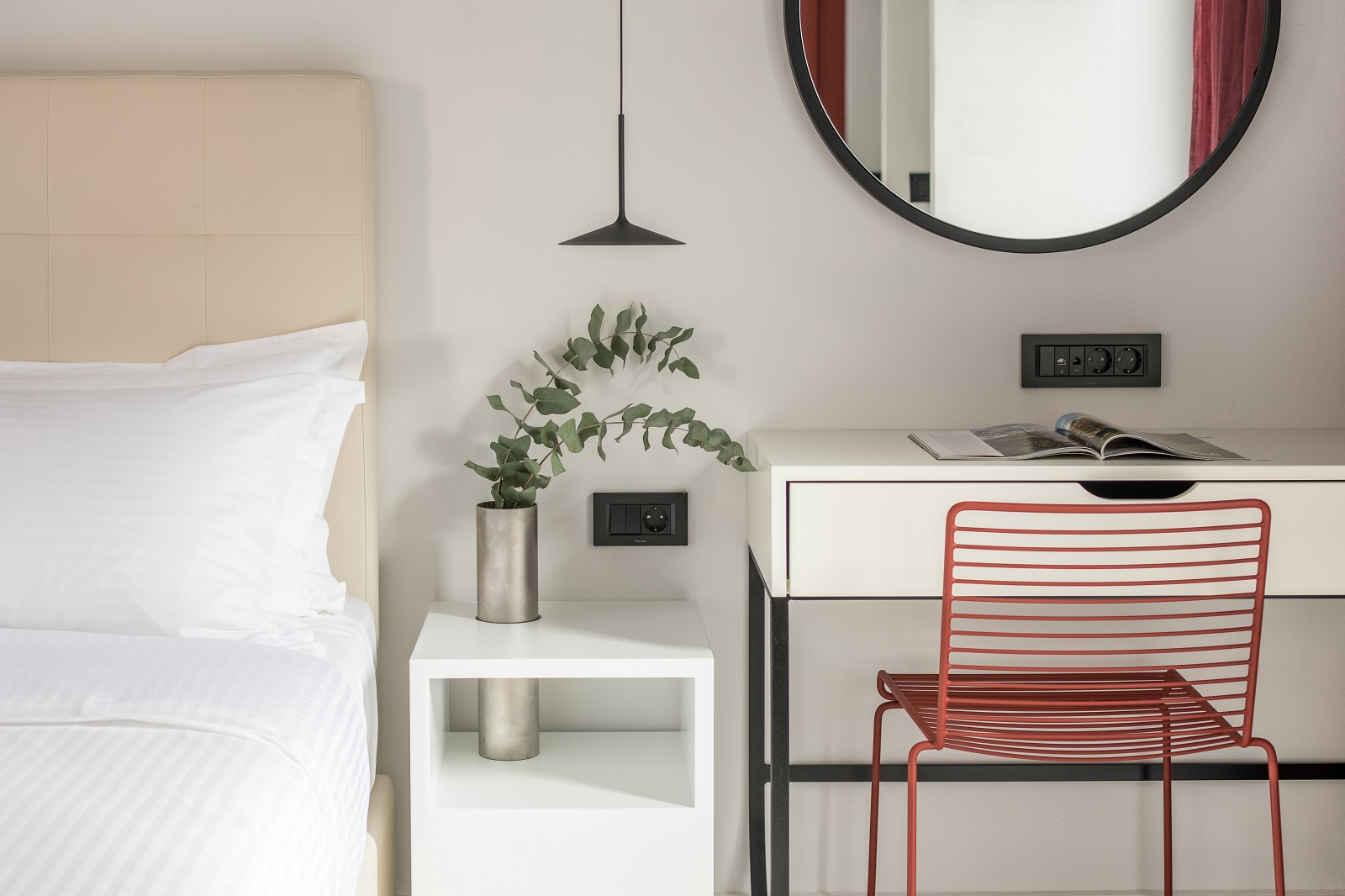
Architectural firm: A2G Architects, Photo © Giorgos Sfakianakis

Architectural firm: A2G Architects, Photo © Giorgos Sfakianakis
To the unknowing visitor the atrium is unexpected given the small façade the building presents to the quiet street, hence it was accentuated even more. Here the main inspiration for the restoration takes a new life with the three-dimensional interpretative construction of one of De Chirico’s paintings along the staircase. The contemporary Art Deco design stays true to the building’s original cultural identity.

Architectural firm: A2G Architects, Photo © Giorgos Sfakianakis
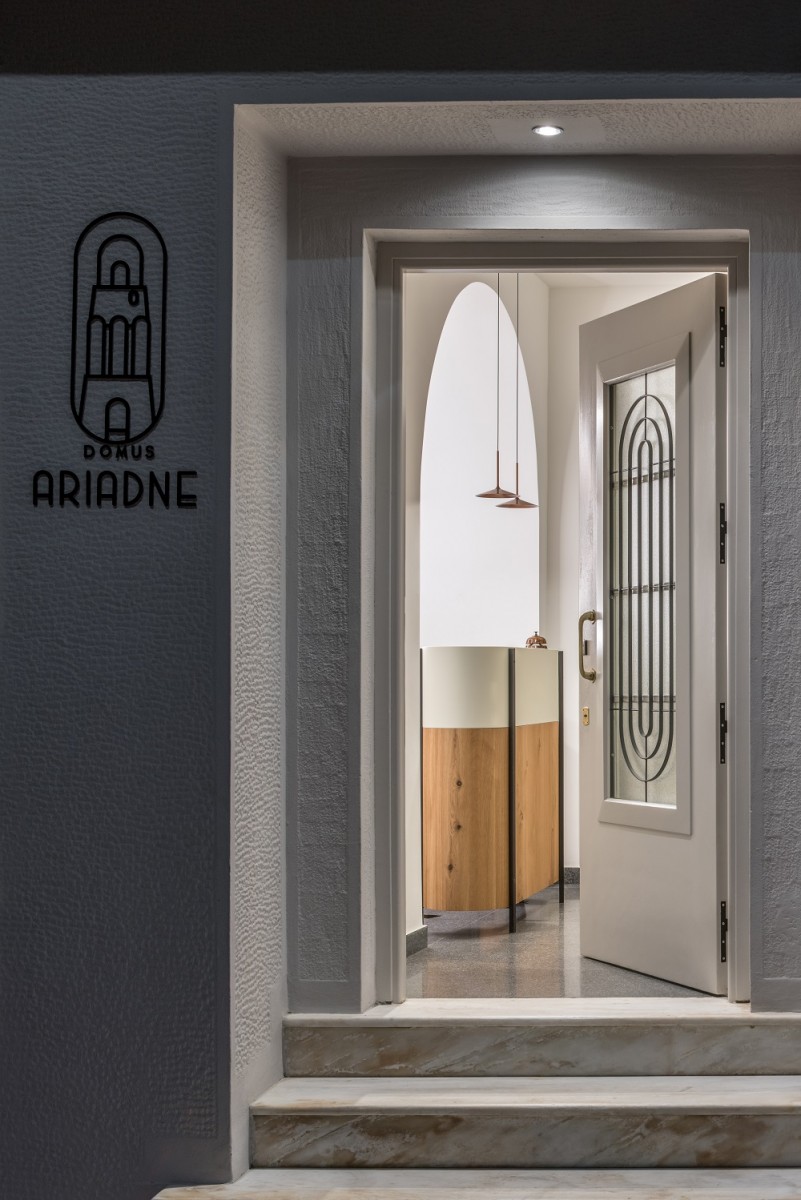
Architectural firm: A2G Architects, Photo © Giorgos Sfakianakis
Facts & Credits:
Project title: Domus Ariadne, Typology: Boutique hotel, Location: Heraklion – Crete – Greece, Project Managers: Galetakis Giorgos – Grigorakis Vangelis, Architectural firm: A2G Architects, Project Architect: Chatziandreou Dimitra, A2G Design Team: Stavroulaki Nafsika, Structural Engineering: Domos Structural, Mechanical Engineering: Markoutsakis John, Site supervision: Galetakis Giorgos – Delimpasis Giannis – Athanasakis Dimitris, Area: 215 sq.m., Year: 2019 – 2020, Status: Completed, Text description: A2G Architects, Photography: Giorgos Sfakianakis