


Design – Διακόσμηση
Soothing colors + curved volumes engulf Tzouma Dermatology Clinic’s interior spaces in Athens by ARID Architects
kataskevesktirion.gr

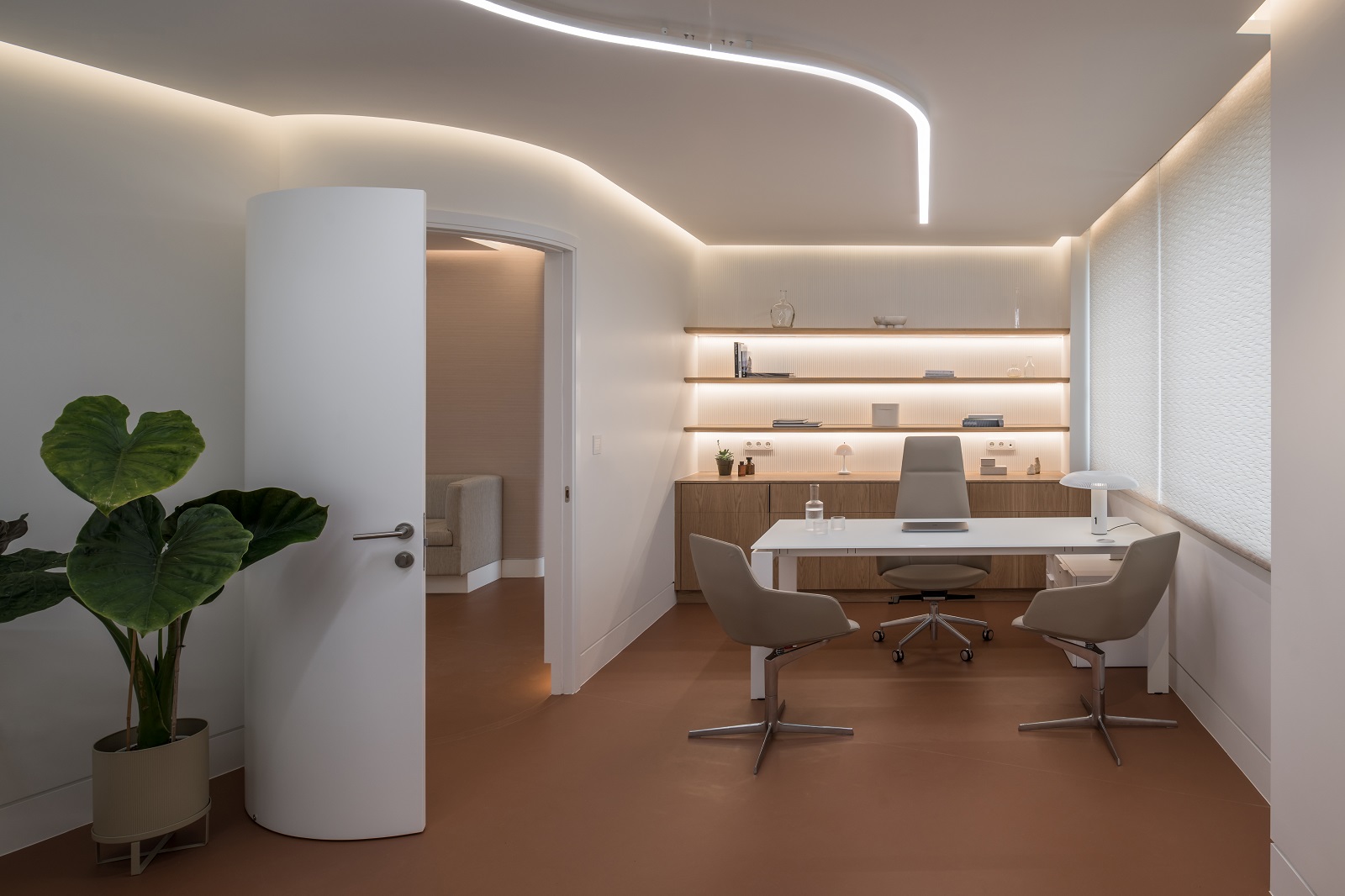
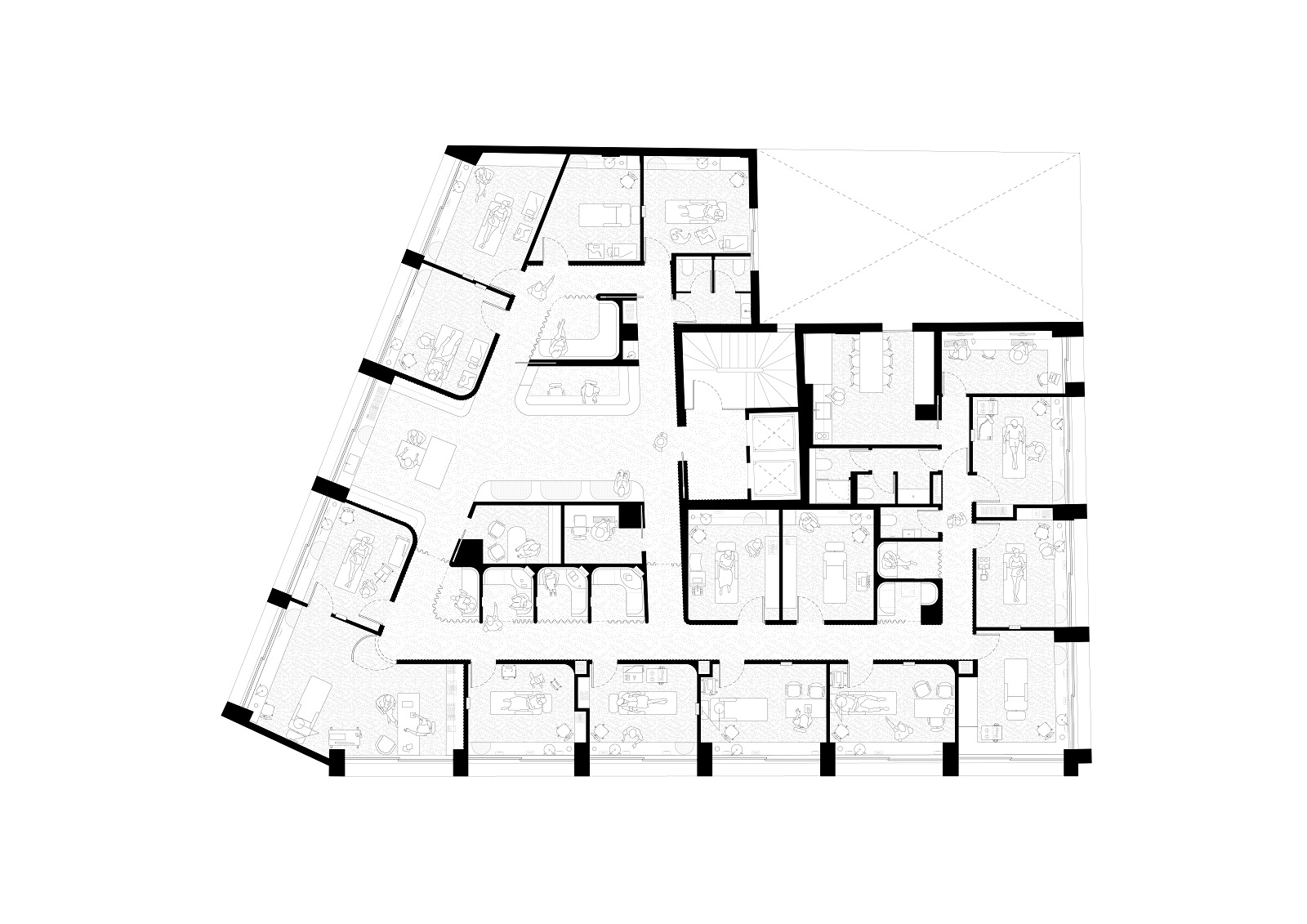
The design of Tzouma Dermatology Clinic, by Arid Architects, is centered around a conceptual framework of medical functionality, rejuvenation, and personalized care. With a capacity to accommodate 250 visitors per day and 15 treatment rooms, the project prioritizes both operational efficiency and user experience.
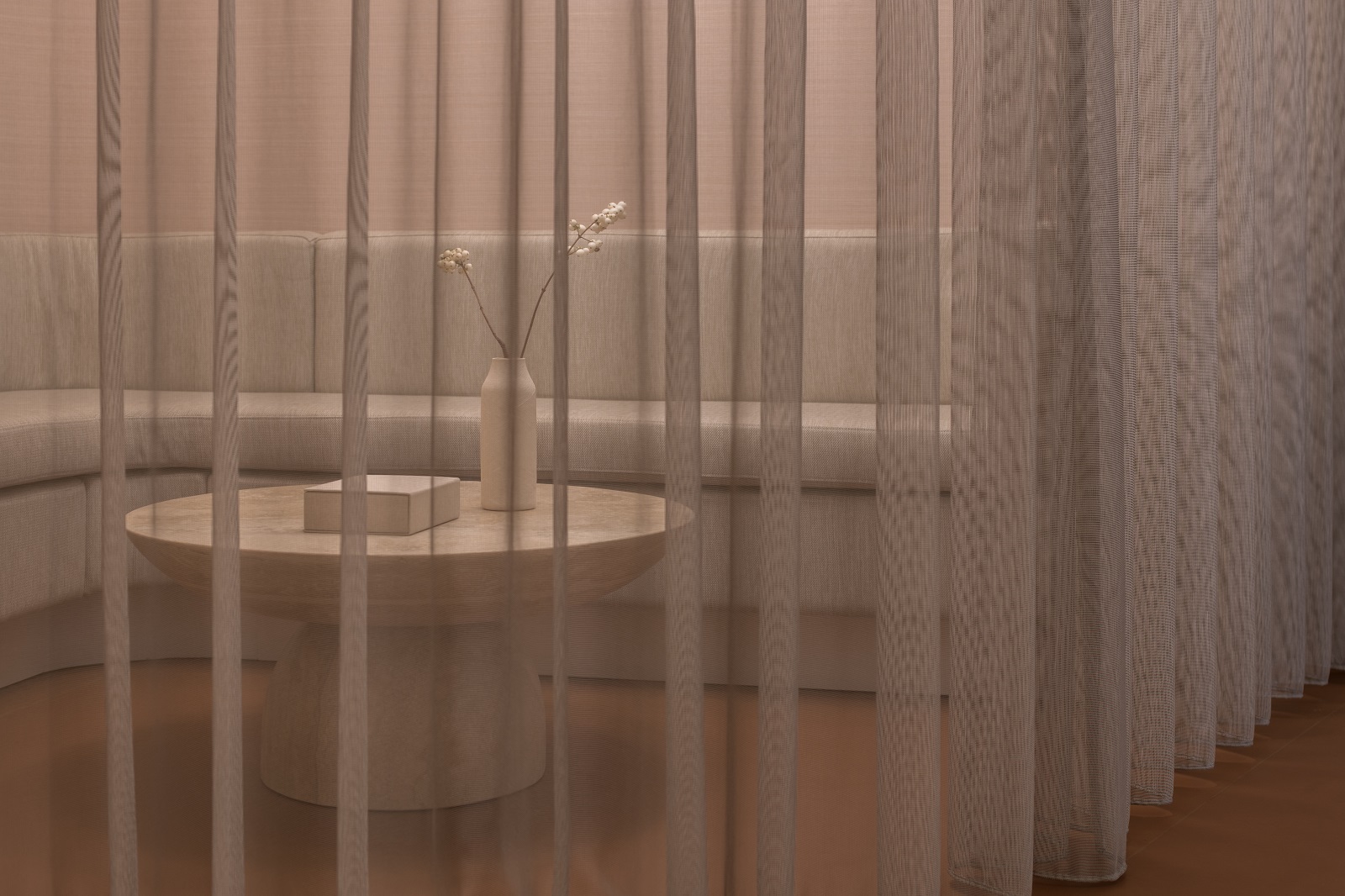
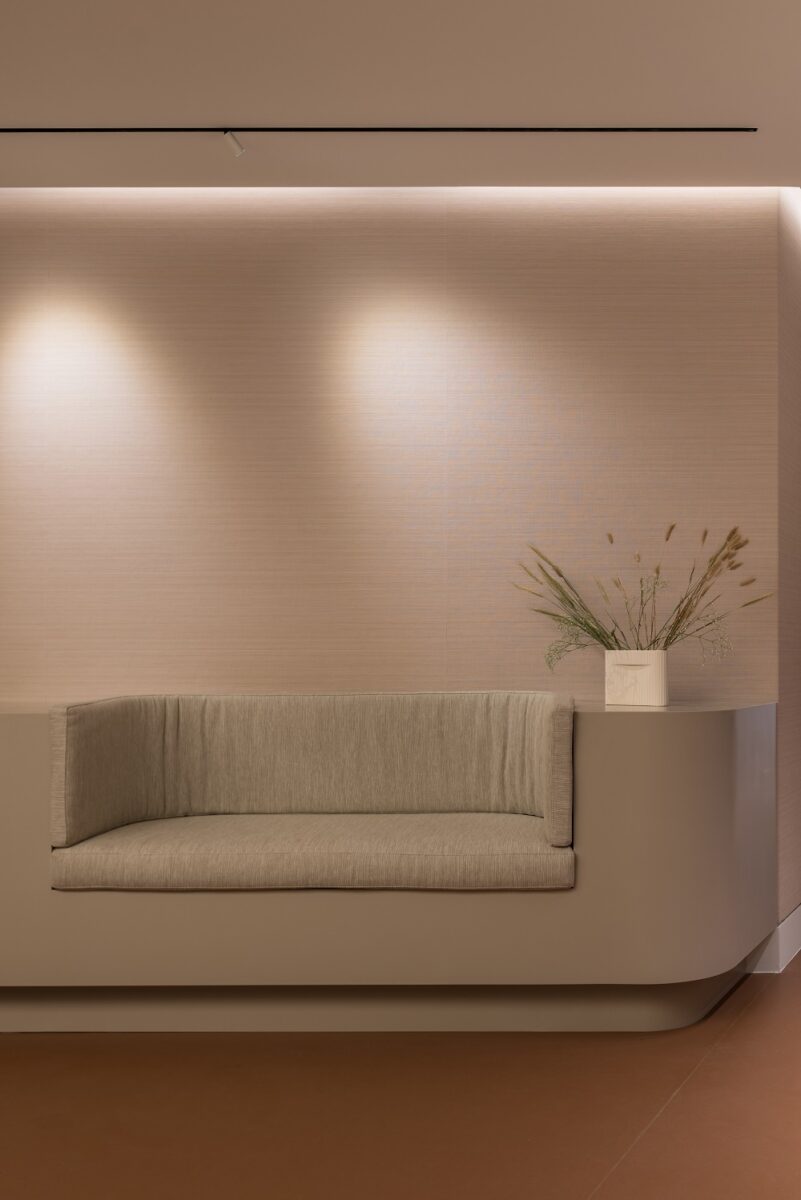
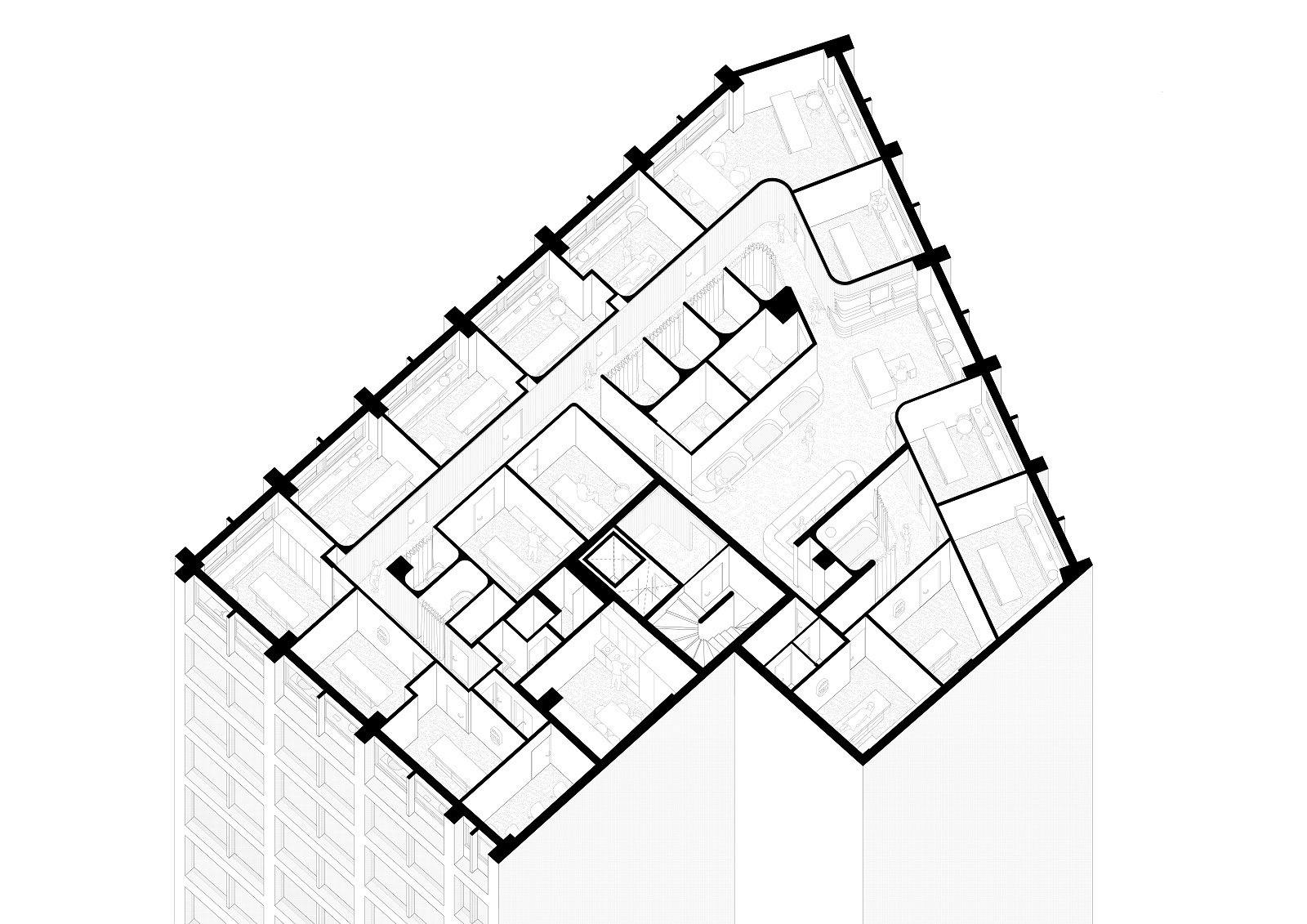
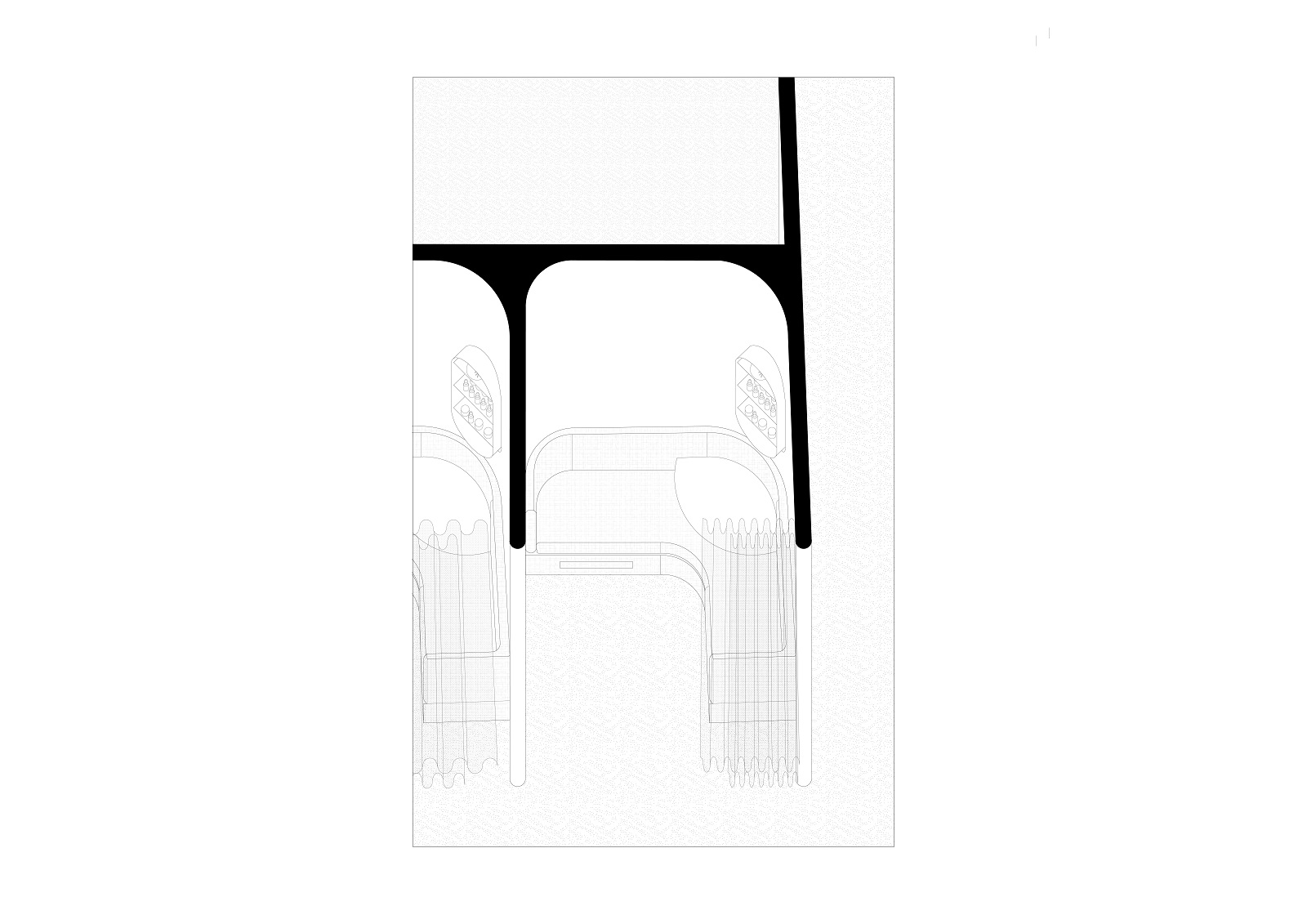
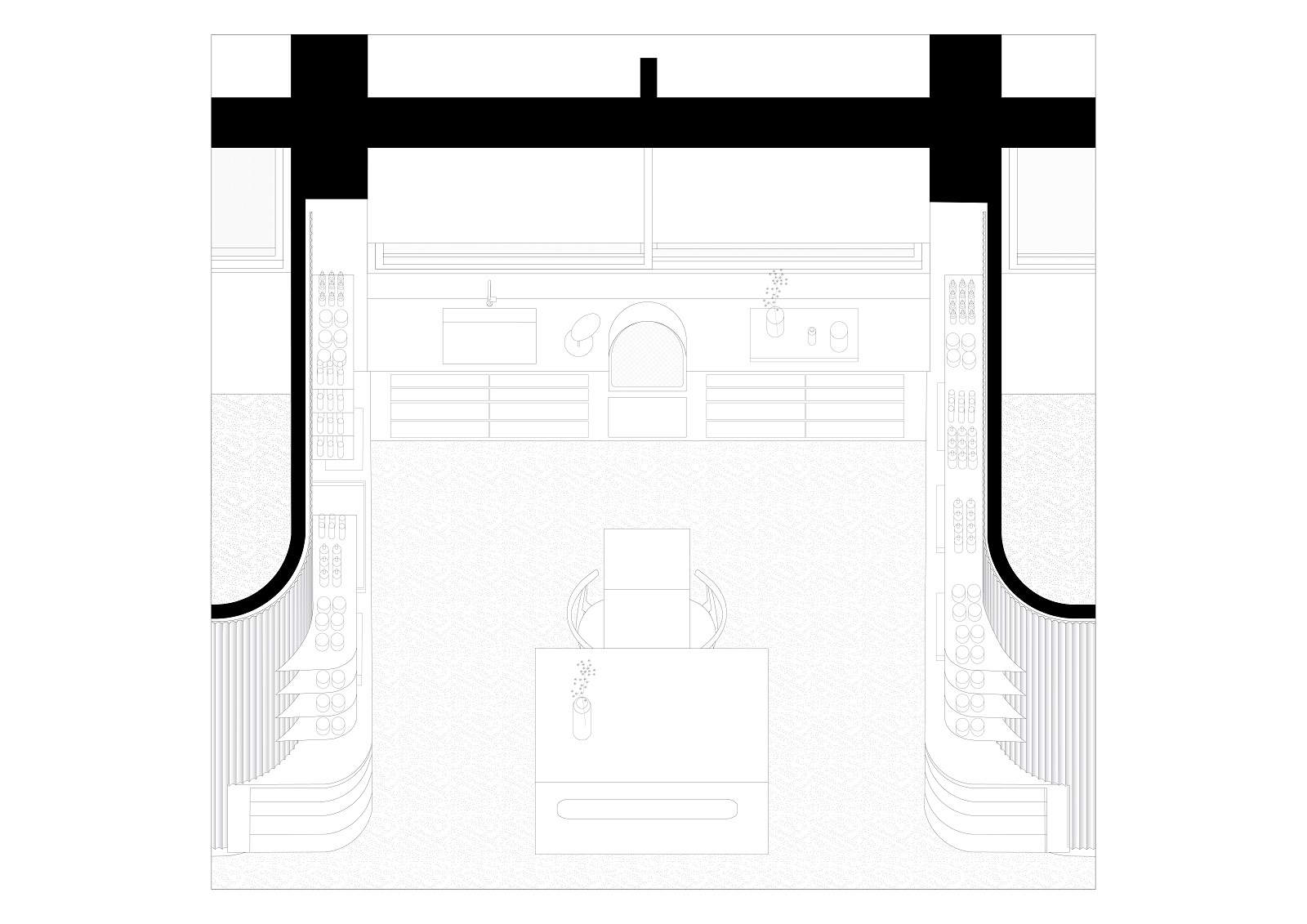
A key design strategy was to move away from the typical large, impersonal waiting room and instead introduce a series of small, intimate waiting booths. These booths, which we envisioned as “cocoons,” symbolize themes of rebirth and rejuvenation — a core concept in dermatology. Each cocoon acts as a multifunctional space, serving not only as a waiting area but also as a consultation zone and a private space for post-treatment recovery. Their design is focused on fostering a sense of privacy, security, and relaxation.
“Wrapped in acoustic fabrics and soft surfaces, they shield visitors from the noise and chaos of a busy clinic, creating a nurturing atmosphere”.
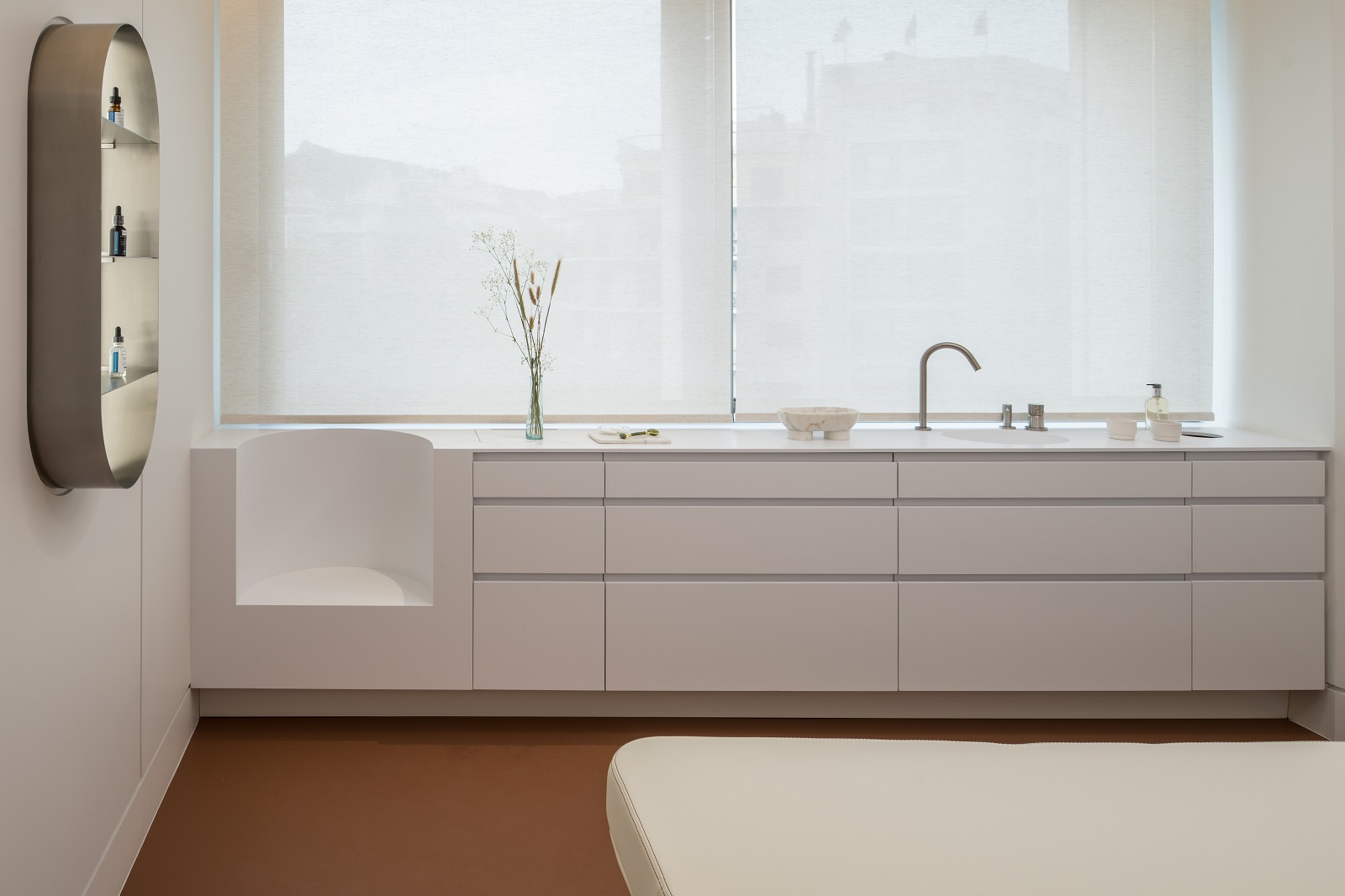
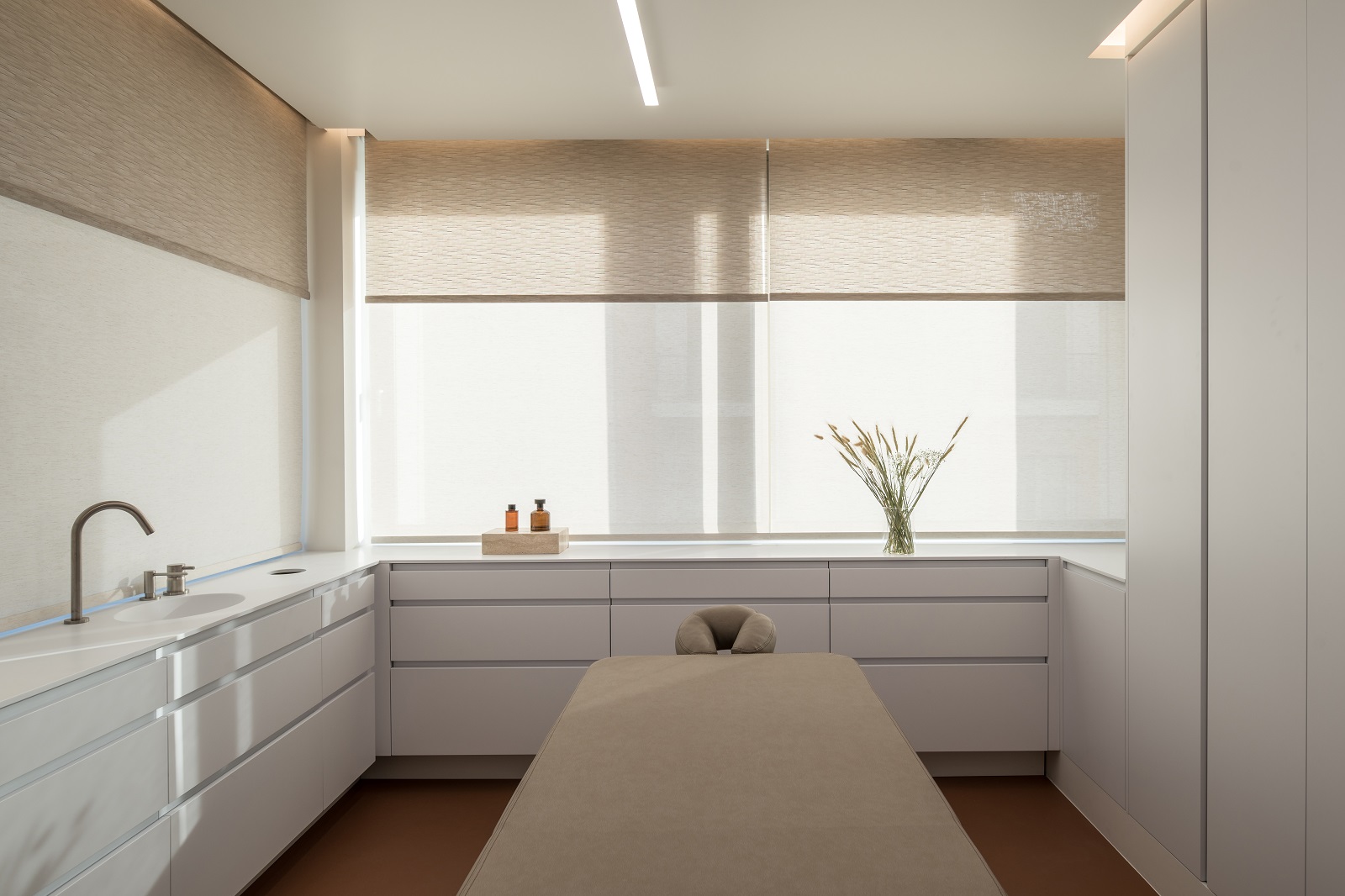
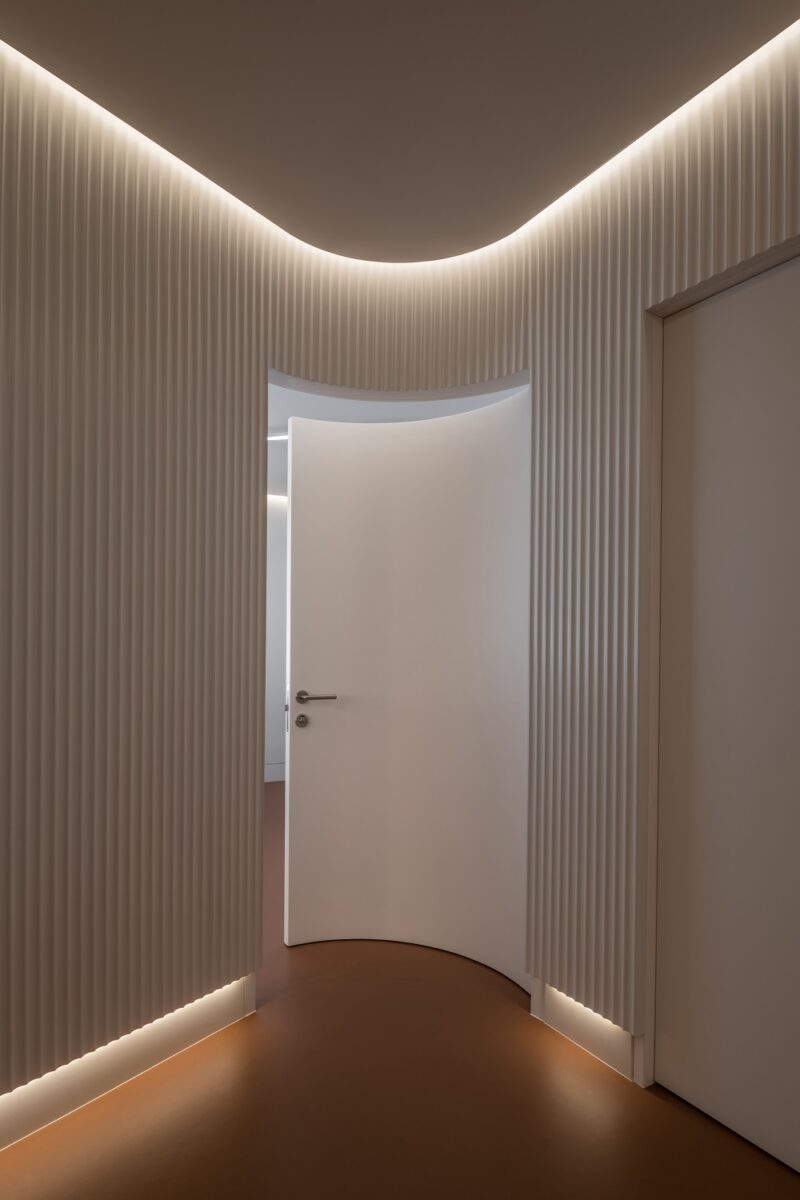
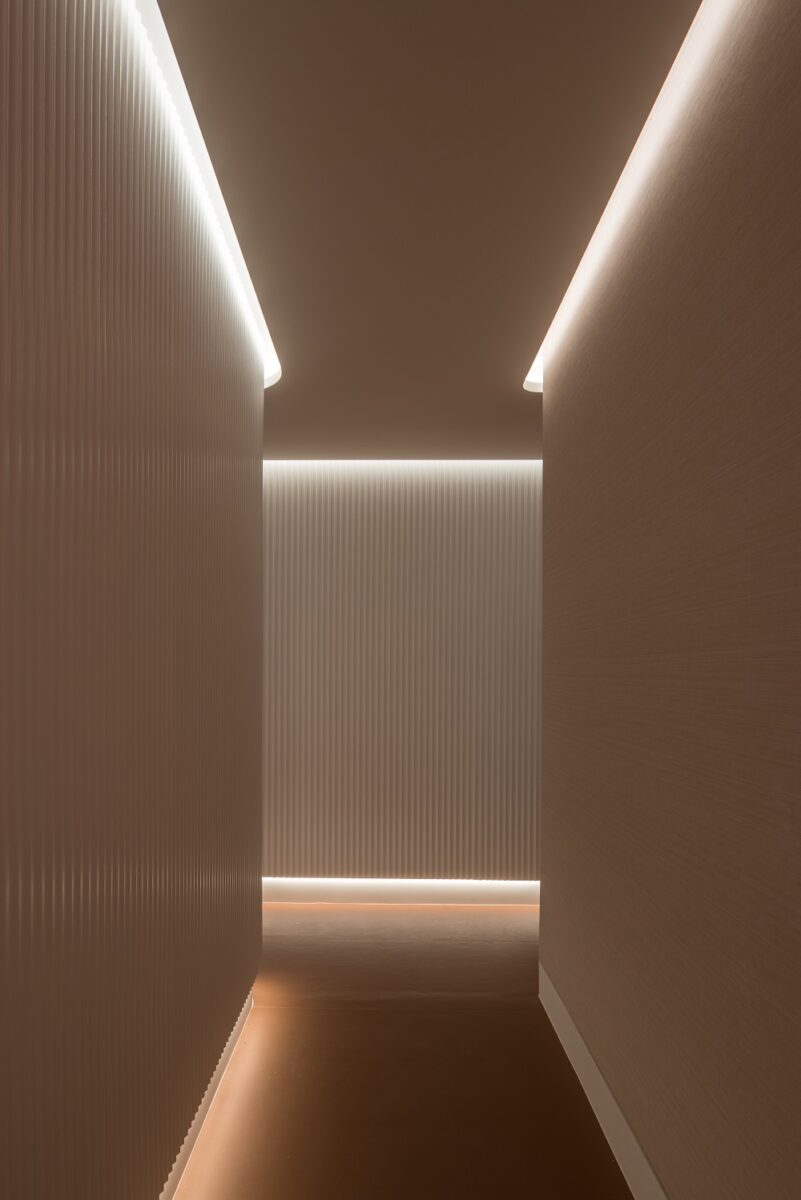
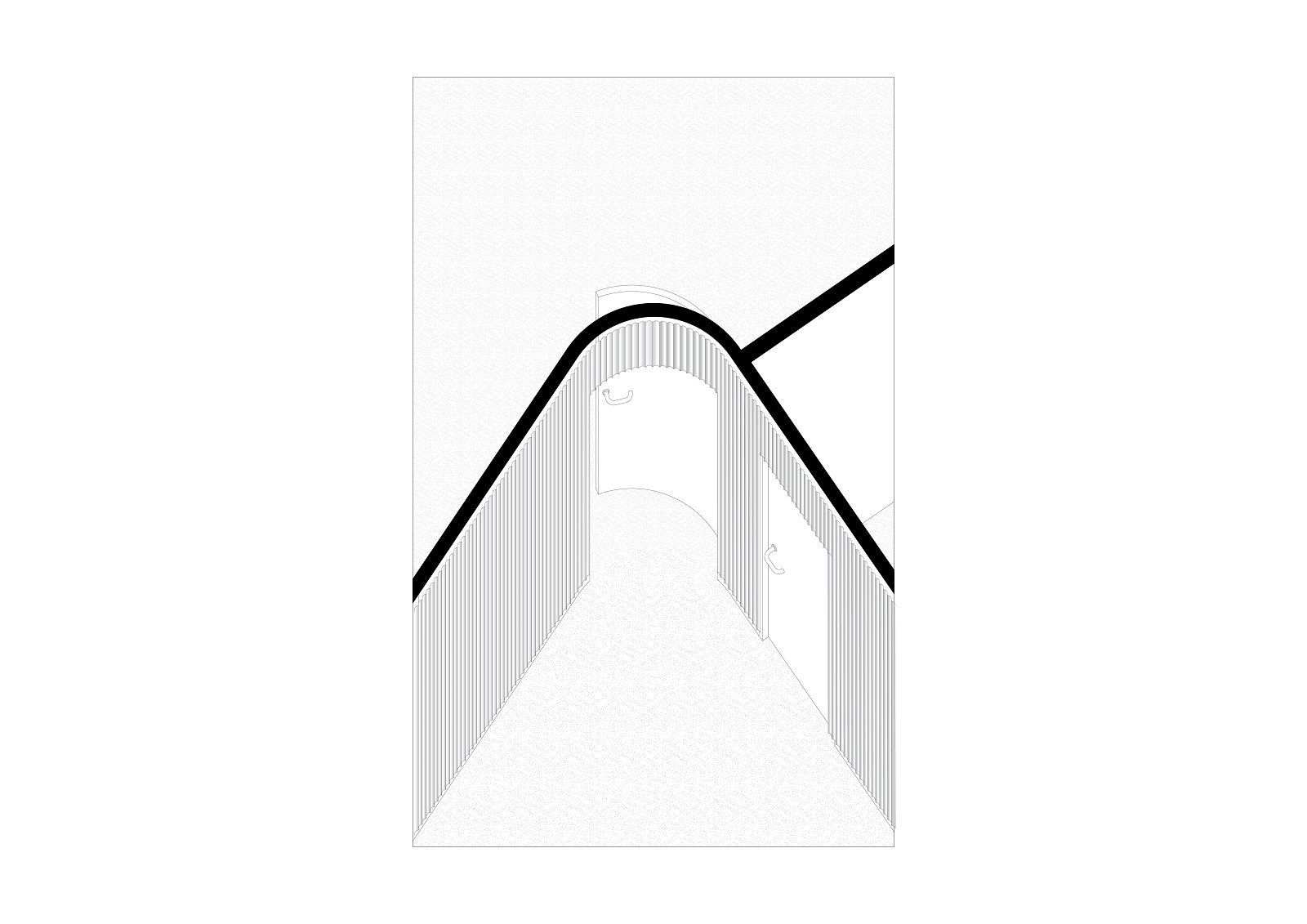
The patient’s journey through the space was a core element of design, which was studied carefully to enhance privacy and offer personalized care. The clinic’s open flow, achieved through multiple directional pathways and soft curves, ensures ease of movement while maintaining a sense of organic separation between spaces. The layout and circulation supports the clinic’s operational needs while enhancing patient comfort and staff efficiency.
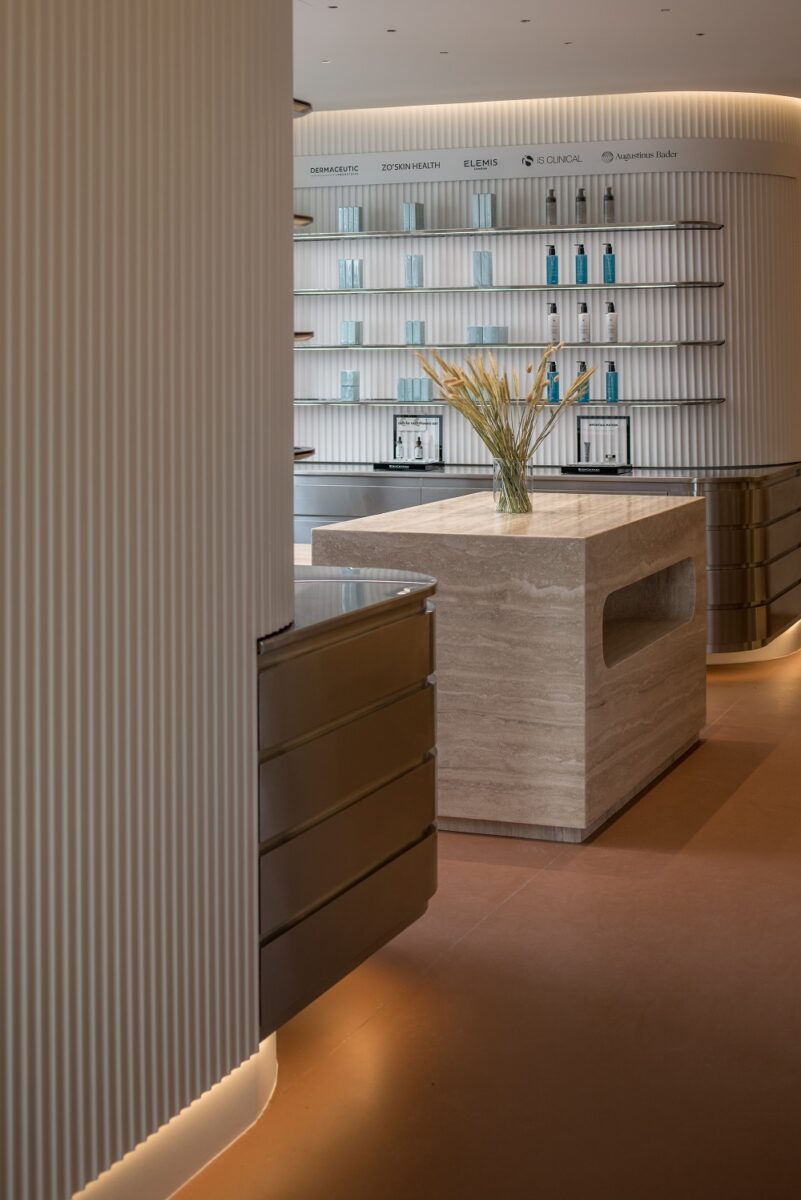
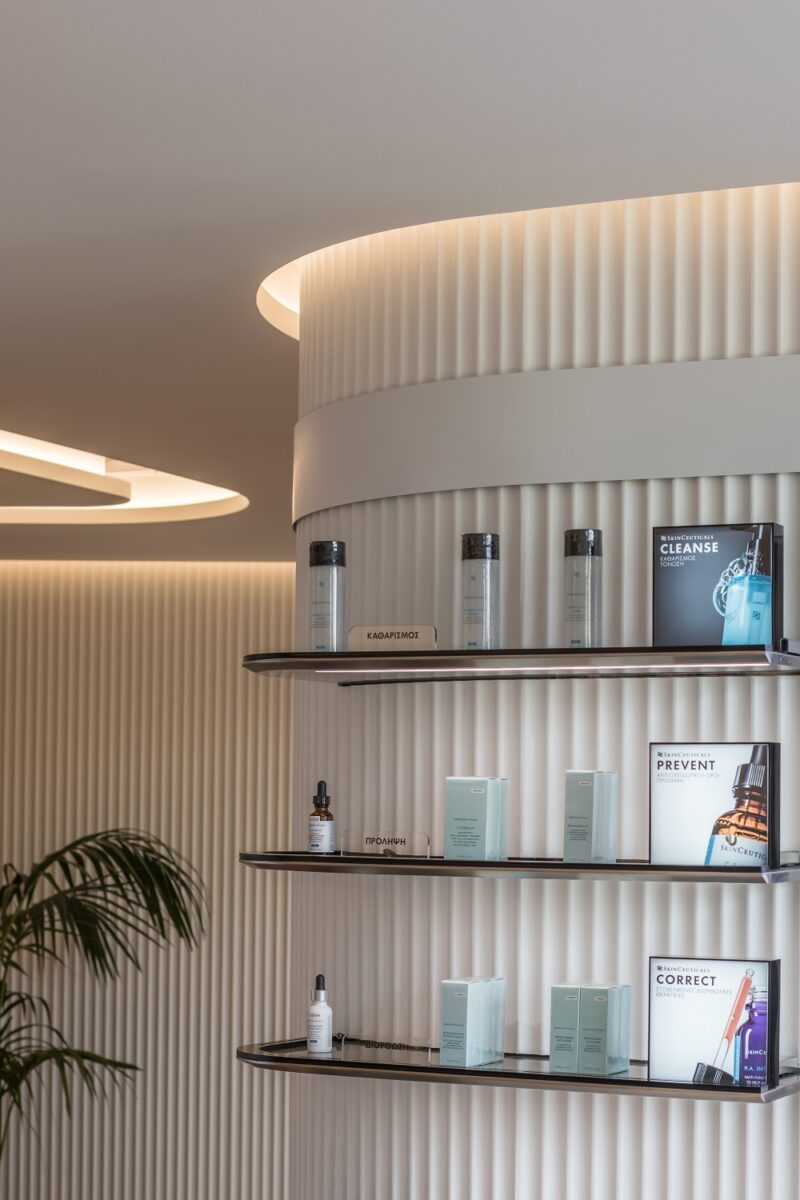
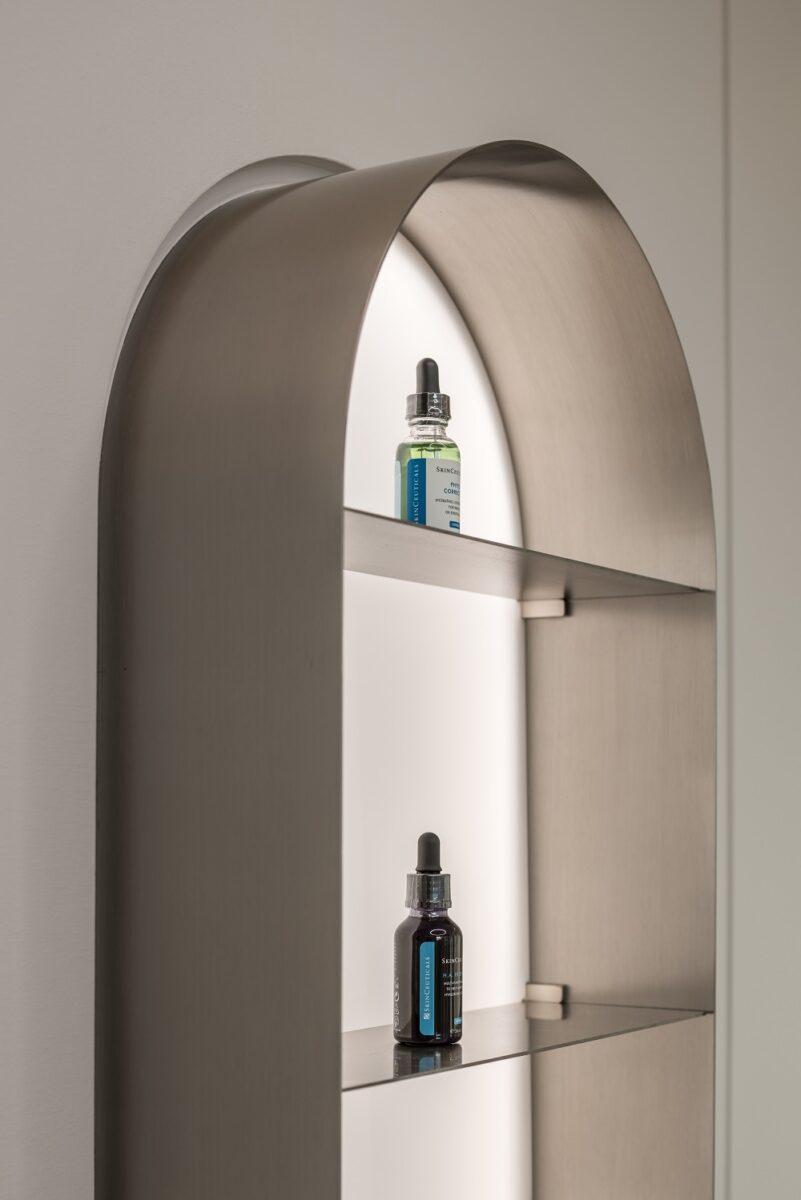
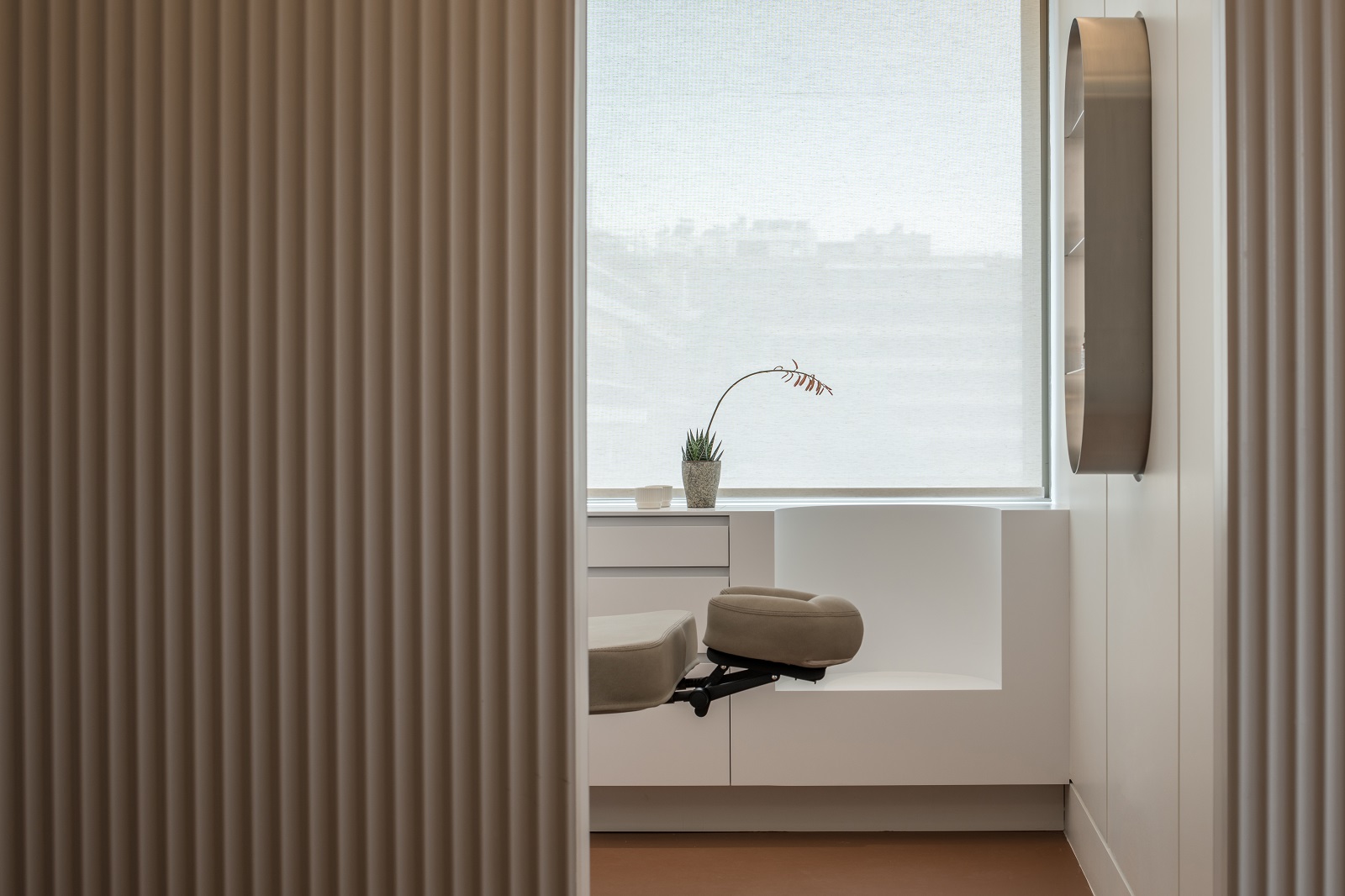
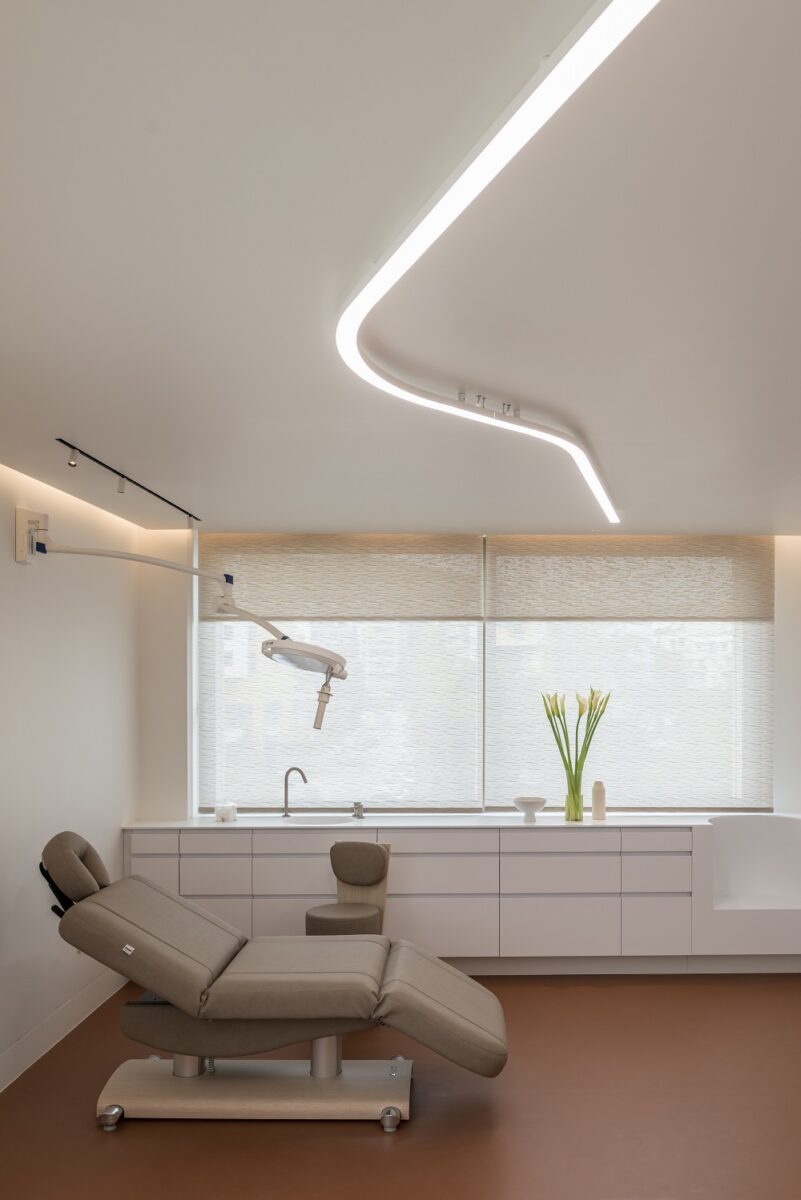
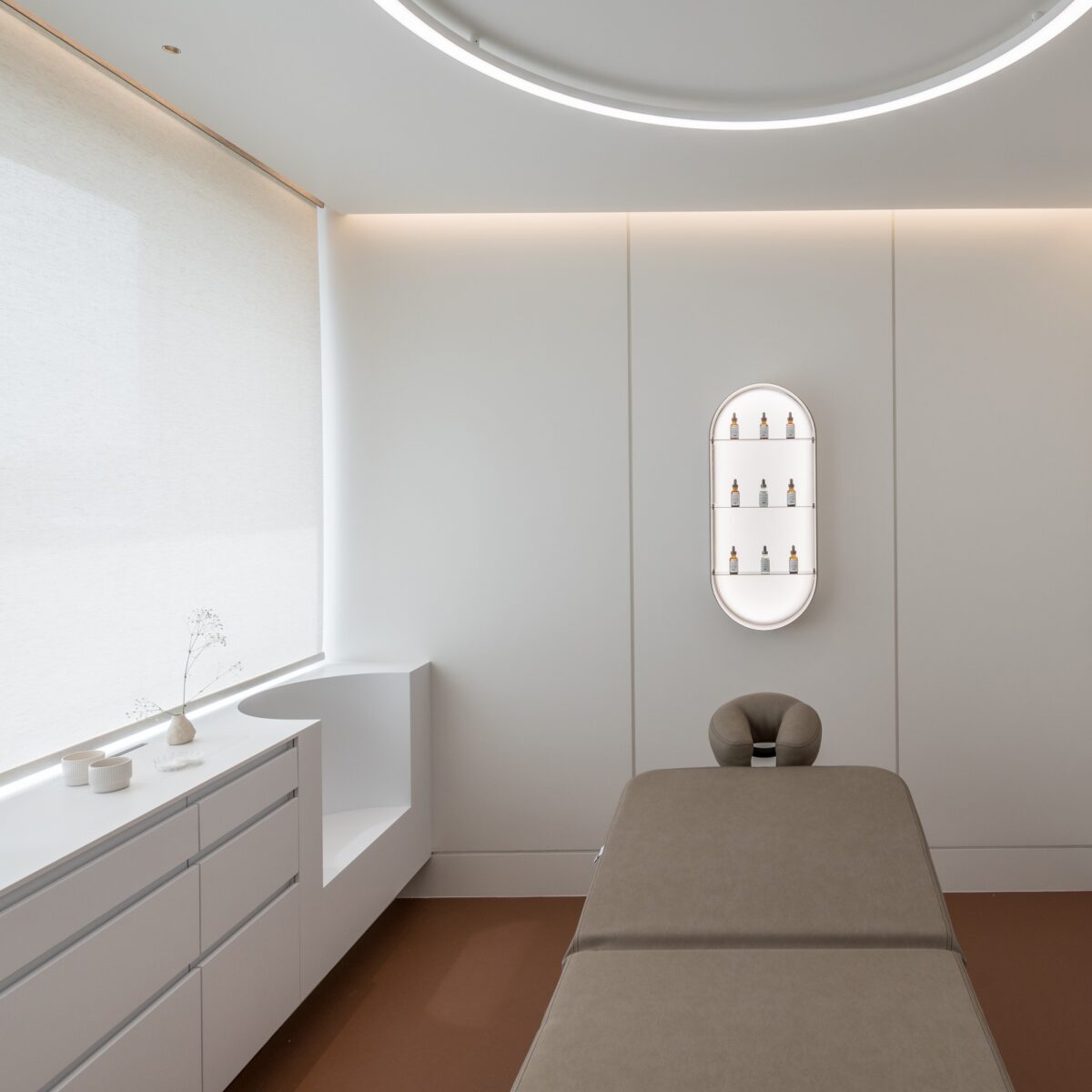
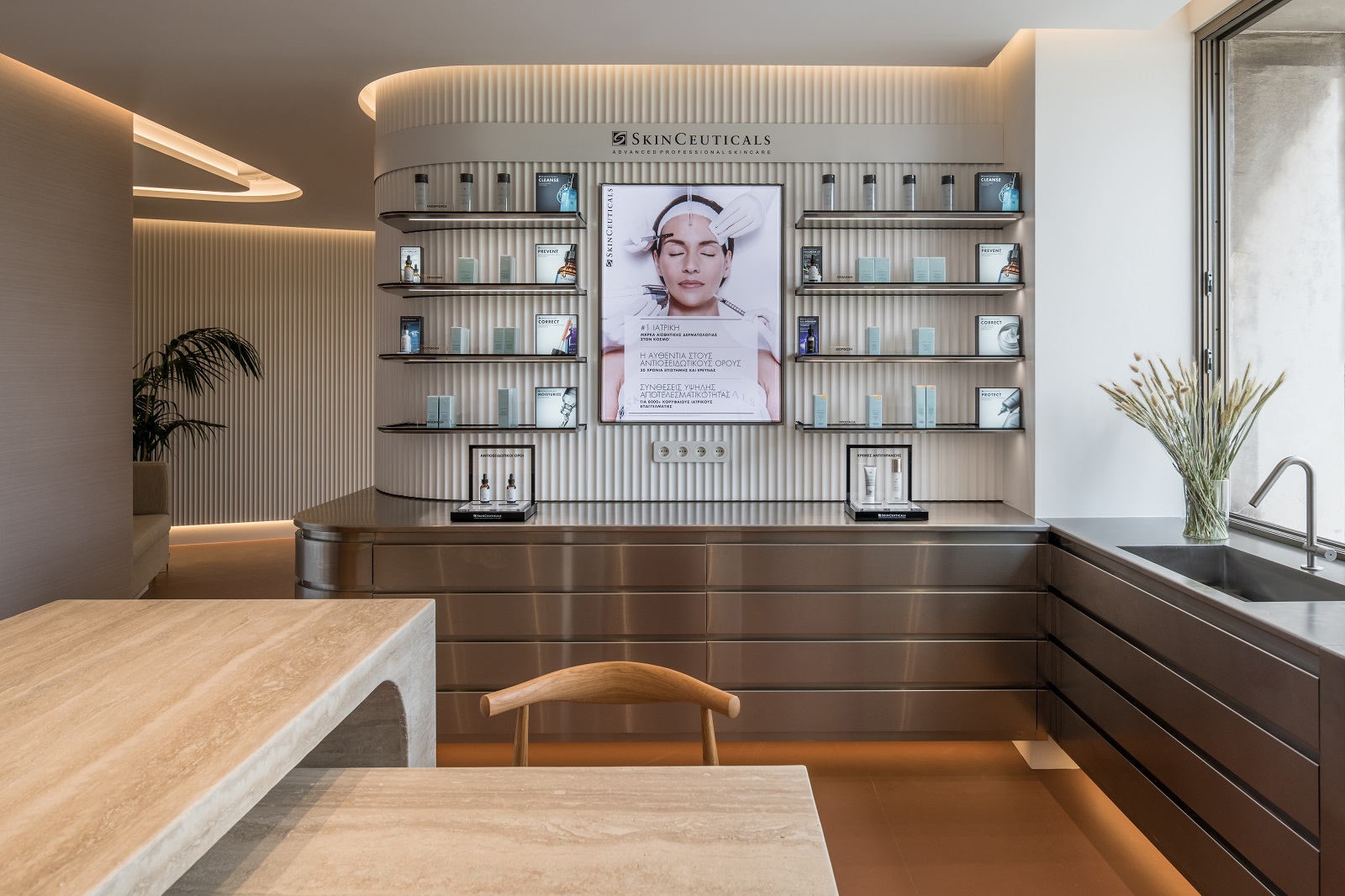
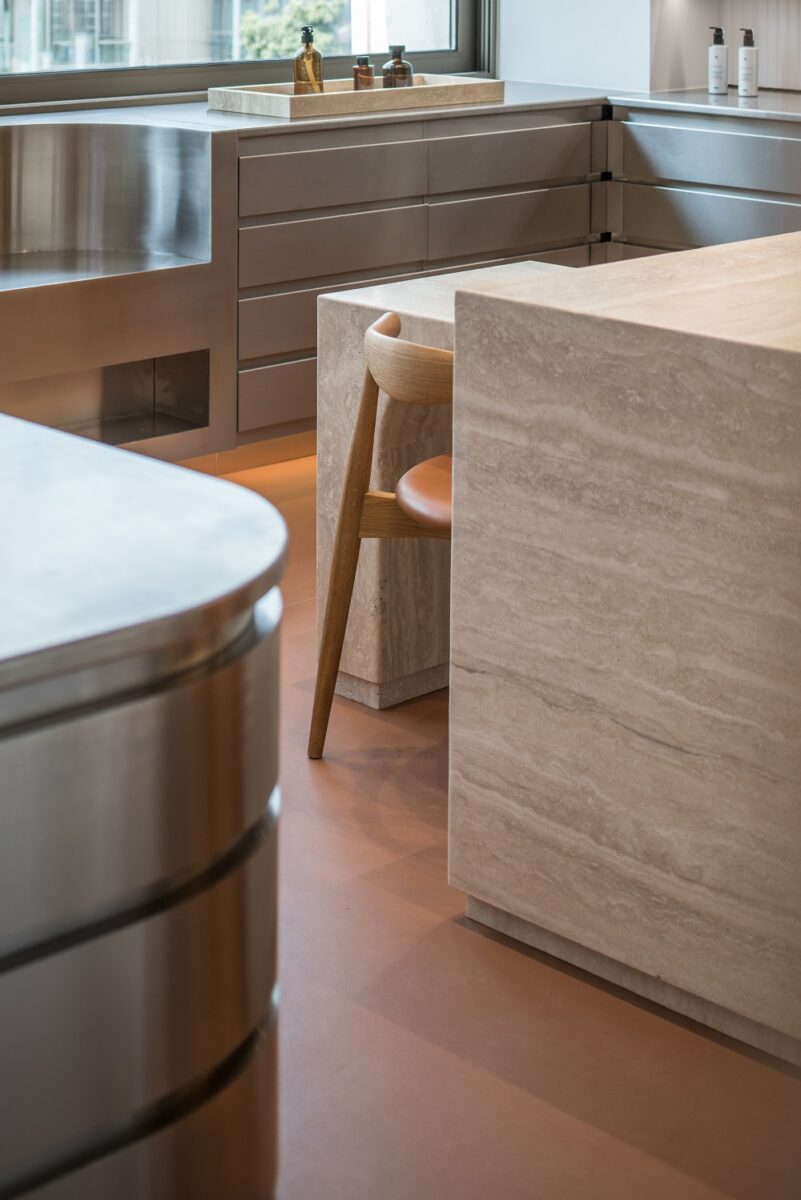
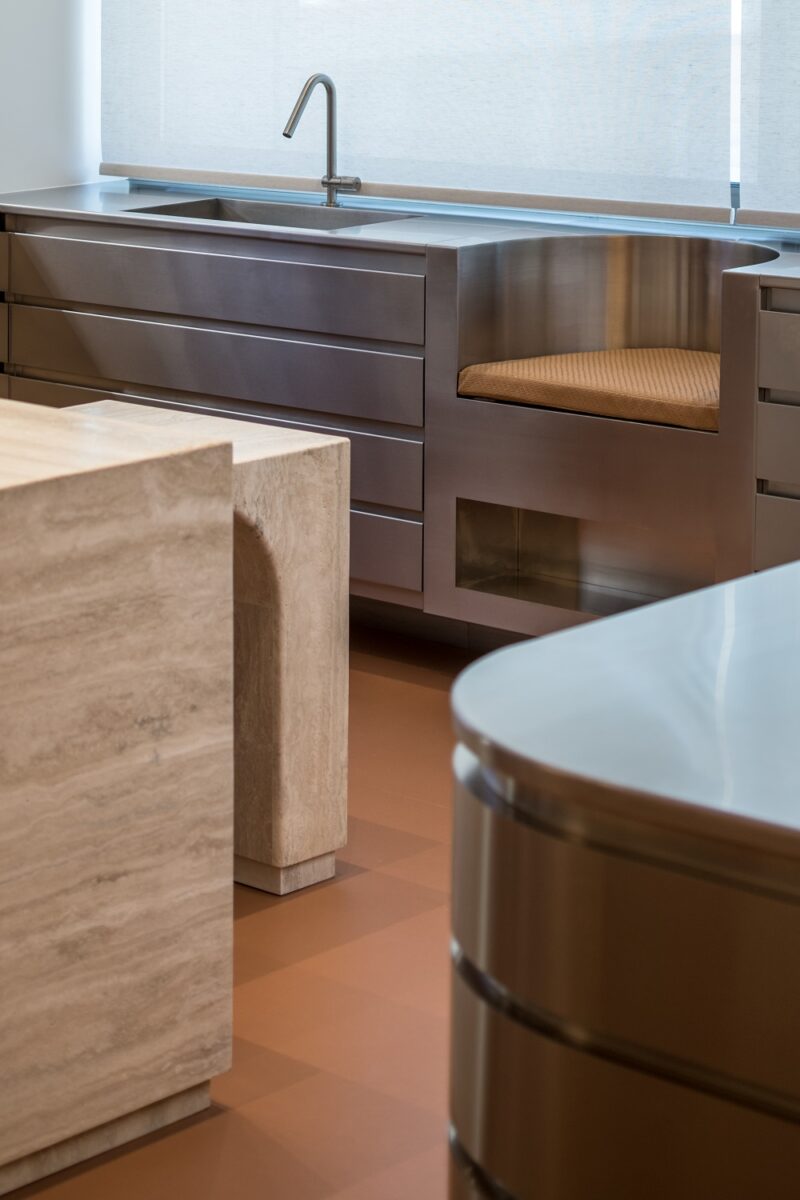
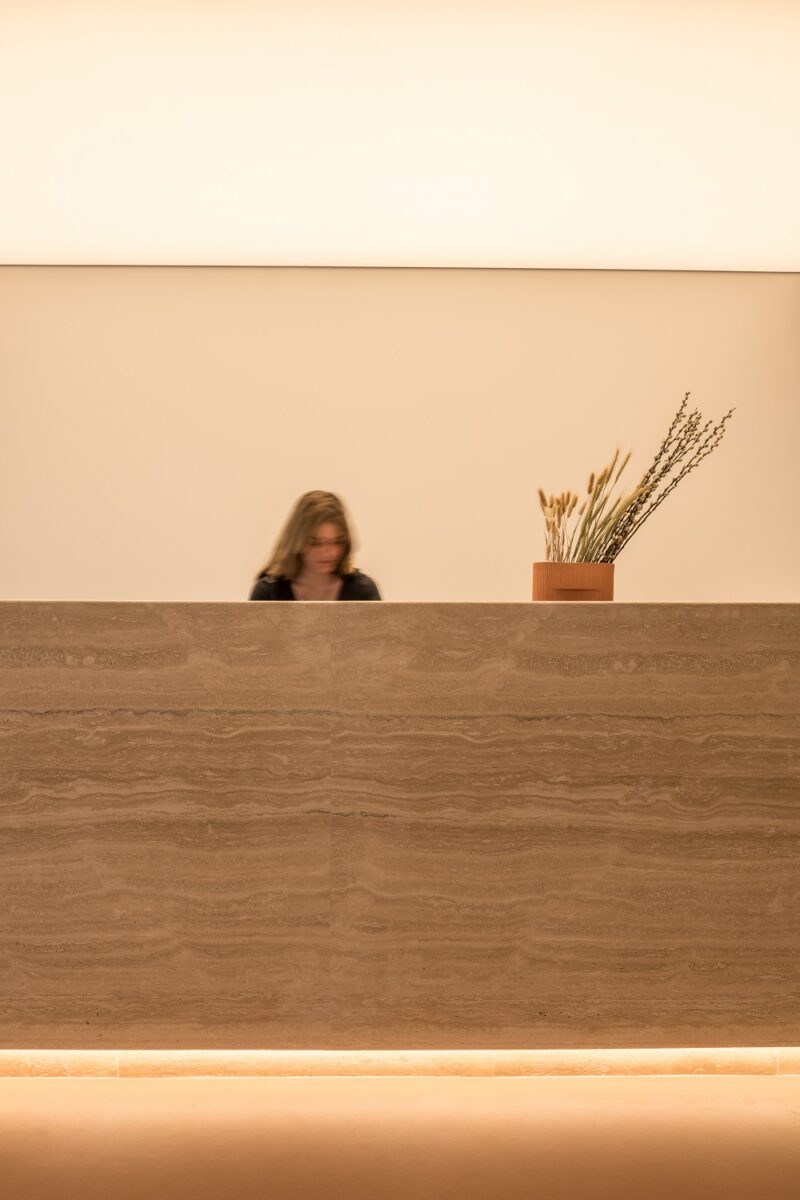
The materiality aims on creating an atmosphere where clinical and wellness meet. Choices of stainless steel and corian reflect a clean, medical feel, and elements like travertine marble, terracotta soft flooring and curved volumes provide a soothing atmosphere. As a commercial space with a high number of visitors and employees, durability played a major role in material selection and joinery.
“Lighting plays a pivotal role in the overall design, acting as a therapeutic tool”.
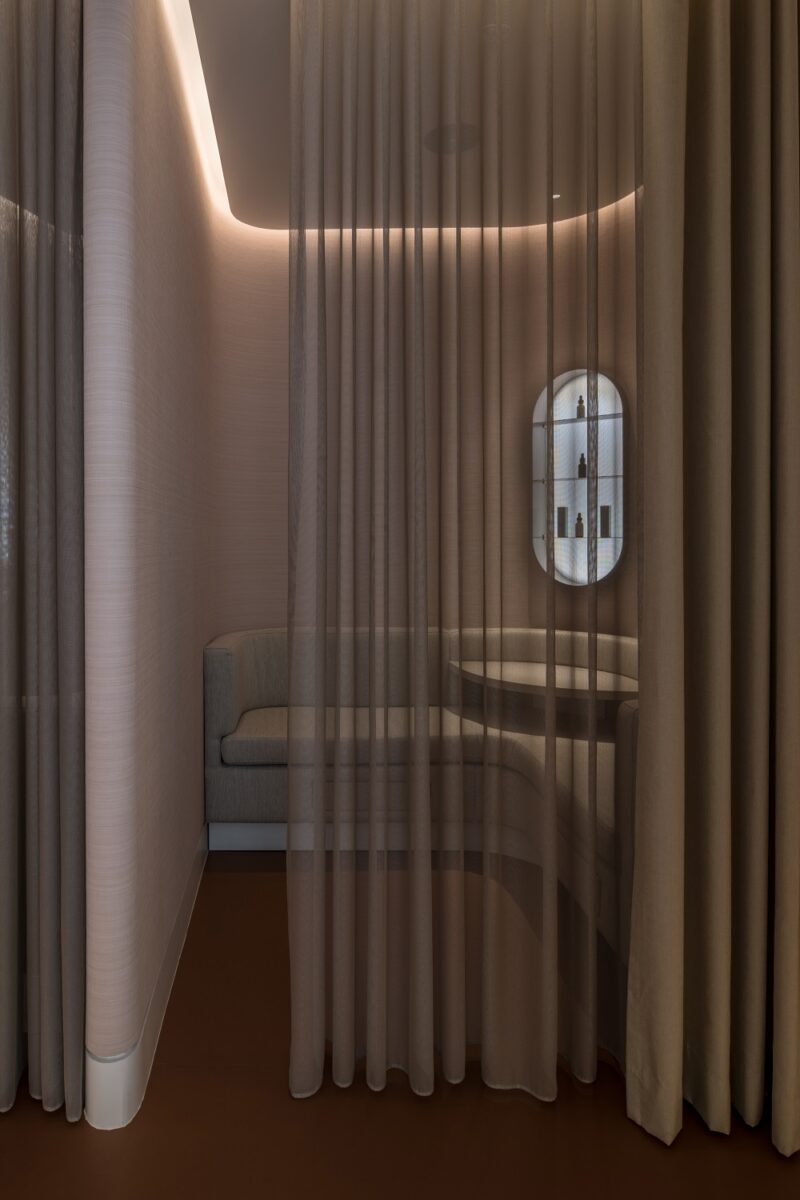
The lighting system is dynamic, with adjustable color temperatures and intensities that change according to the needs of each space. From bright, energizing light for treatment areas to soft, calming tones for recovery zones, the lighting enhances the mood and comfort of patients throughout their visit.
During the concept phase, Arid Architects prioritized understanding the needs of the clinic’s staff and workflows. They participated in therapies, conducted interviews, and analyzed their daily work routines. By deeply engaging with the staff, they identified pain points and tailored spatial solutions to improve workflow, ensuring the clinic operates efficiently while maintaining a patient-centered atmosphere. This dermatology clinic project not only aims to be a state-of-the-art medical facility but also a space that encourages healing and well-being, both for patients and staff alike.
Facts & Credits:
Project Title: Tzouma Cinic, Typology: Dermatology Clinic | Interior design, Location: Athens – Greece, Architecture: Arid Architects, Design team: Roxani Maragkoudaki – Maritina Dimaraki, Mechanical Engineer: ConAP, Lighting Engineer: CPLD, Wellness Consultant: Ioannis Charalambous, Retail Consultant: L’Oréal SkinCeuticals, Woodworks: Xylo34, Marble works: Delta Marbles, Metalwork: Markakos S.A., Furniture: Darko Hellas – Myran, Contractor: Berios, Size: 400sqm, Year of completion: 2022, Text description: Arid Architects, Photography: Giorgos Sfakianakis




Υποβάλλετε ένα άρθρο
Στείλτε μας το άρθρο σας και θα επικοινωνήσουμε μαζί σας.


Σχετικά
Διαβάστε επίσης
 2
Σεπ
2026
2
Σεπ
2026
Τα νέα γραφεία της KPMG στην Αθήνα είναι ένα πρότυπο εργασιακό περιβάλλον που βασίζεται στο sustainable design
 1
Σεπ
2026
1
Σεπ
2026
Olivier: Ένα μπρουταλιστικό διαμέρισμα στην Αθήνα με χώρους που εκπέμπουν κομψότητα, άνεση και coziness
 31
Αυγ
2026
31
Αυγ
2026
Η απίθανη ανακαίνιση ενός αστικού διαμερίσματος στην Ερμού – Αίγλη παλιάς καλής Αθήνας στο σήμερα, με μίνιμαλ πινελιές
 26
Αυγ
2026
26
Αυγ
2026
Vilma Agrafioti Architects maintain the timeless charm of Mykonos Beach Hotel with a clean, modern aesthetic
 25
Αυγ
2026
25
Αυγ
2026
Amarakos: Ένα ξενοδοχείο ευεξίας στην Κύπρο γεφυρώνει την παραδοσιακή αρχιτεκτονική με το σύγχρονο τρόπο ζωής
 24
Αυγ
2026
24
Αυγ
2026


