

Μετατροπή υπόγειων χώρων πολυκατοικιών σε διαμερίσματα Airbnb – Τι πρέπει να γνωρίζουμε;
2 Μαρτίου 2026
Στην Alba περνά ο έλεγχος της Aluminium Dunkerque
3 Μαρτίου 2026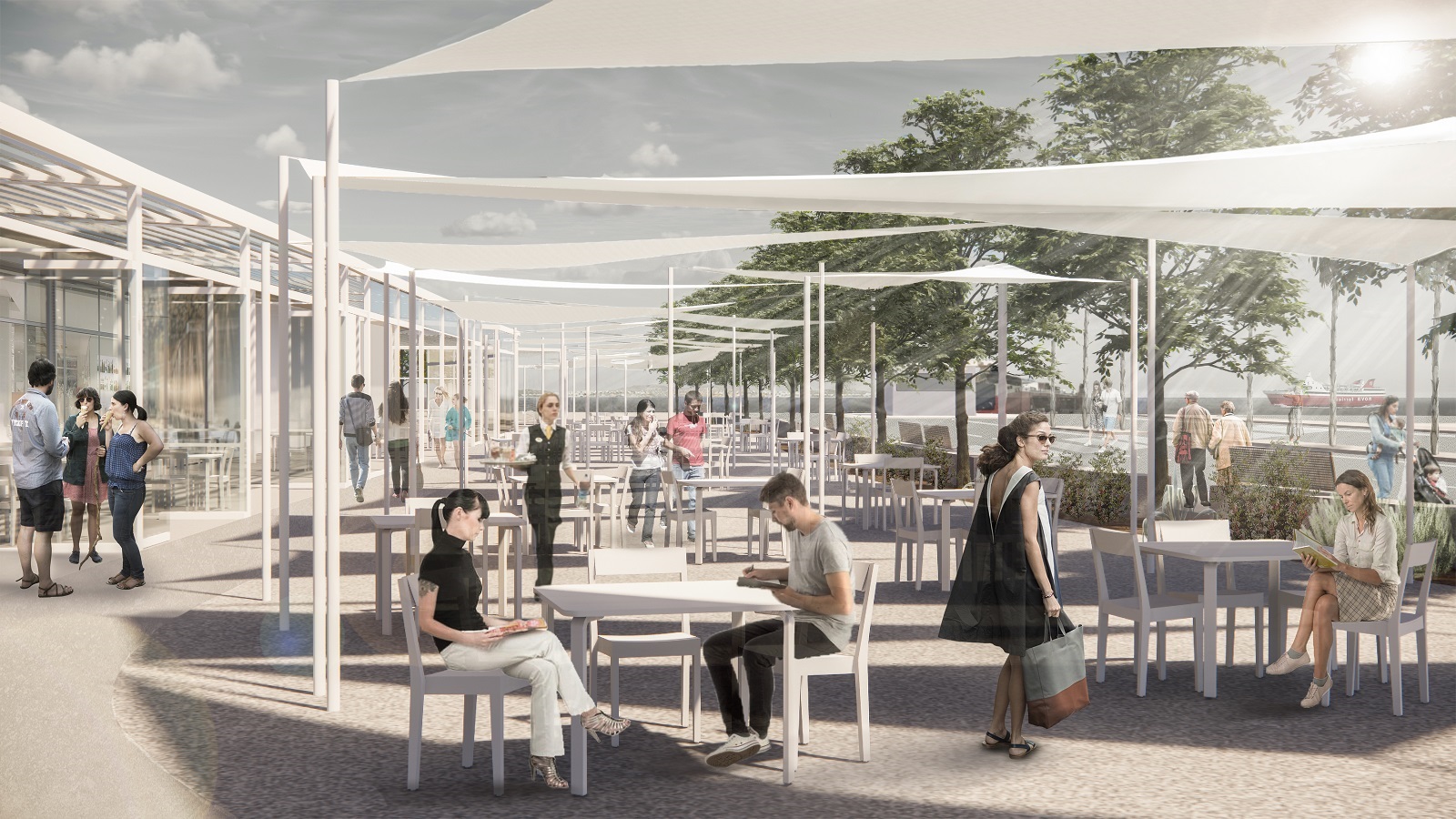
Ανάπλαση Εμπορικής Ζώνης του Λιμένα Ραφήνας: Μια νέα αφήγηση για το δημόσιο χώρο της εισόδου του λιμανιού Ραφήνας
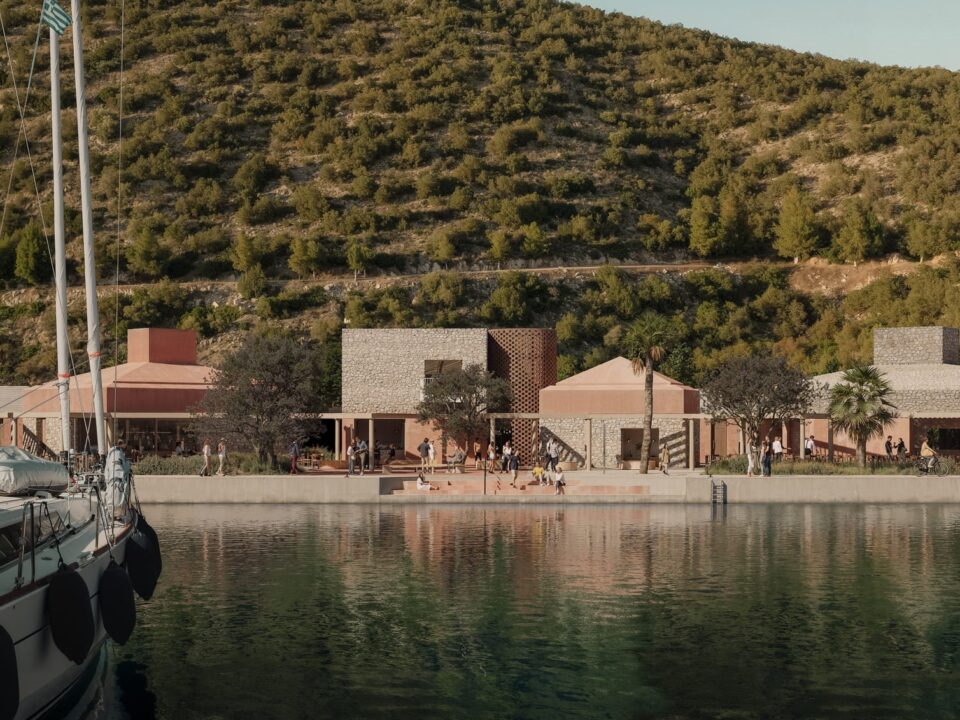
Η είσοδος του λιμανιού της Ραφήνας πρόκειται για έναν δημόσιο χώρο υψηλής συμβολικής και λειτουργικής αξίας, έναν ενδιάμεσο τόπο μετάβασης και υποδοχής, που συνδέει την Αττική με το νησιωτικό σύμπλεγμα των Κυκλάδων.
Με επιτακτική την ανάγκη για καθαίρεση των υπαρχουσών αυθαίρετων πρόχειρων κατασκευών, η πρόταση του αρχιτεκτονικού γραφείου Constantine Bouras Studio για την δημιουργία μίας ενιαίας κατασκευής καλείται να αποκαταστήσει την αρχιτεκτονική συνέχεια του υπάρχοντος κτηριακού μετώπου [αποτελούμενο από μικρές μονάδες με κοινά τυπολογικά χαρακτηριστικά], με τη δημιουργία μιας συνεχόμενης, αισθητικά και λειτουργικά, ζώνης ημιυπαίθριων και υπαίθριων χώρων κατά μήκος της προβλήτας του παραλιακου μέτωπου της εισόδου του λιμανιού της Ραφήνας.
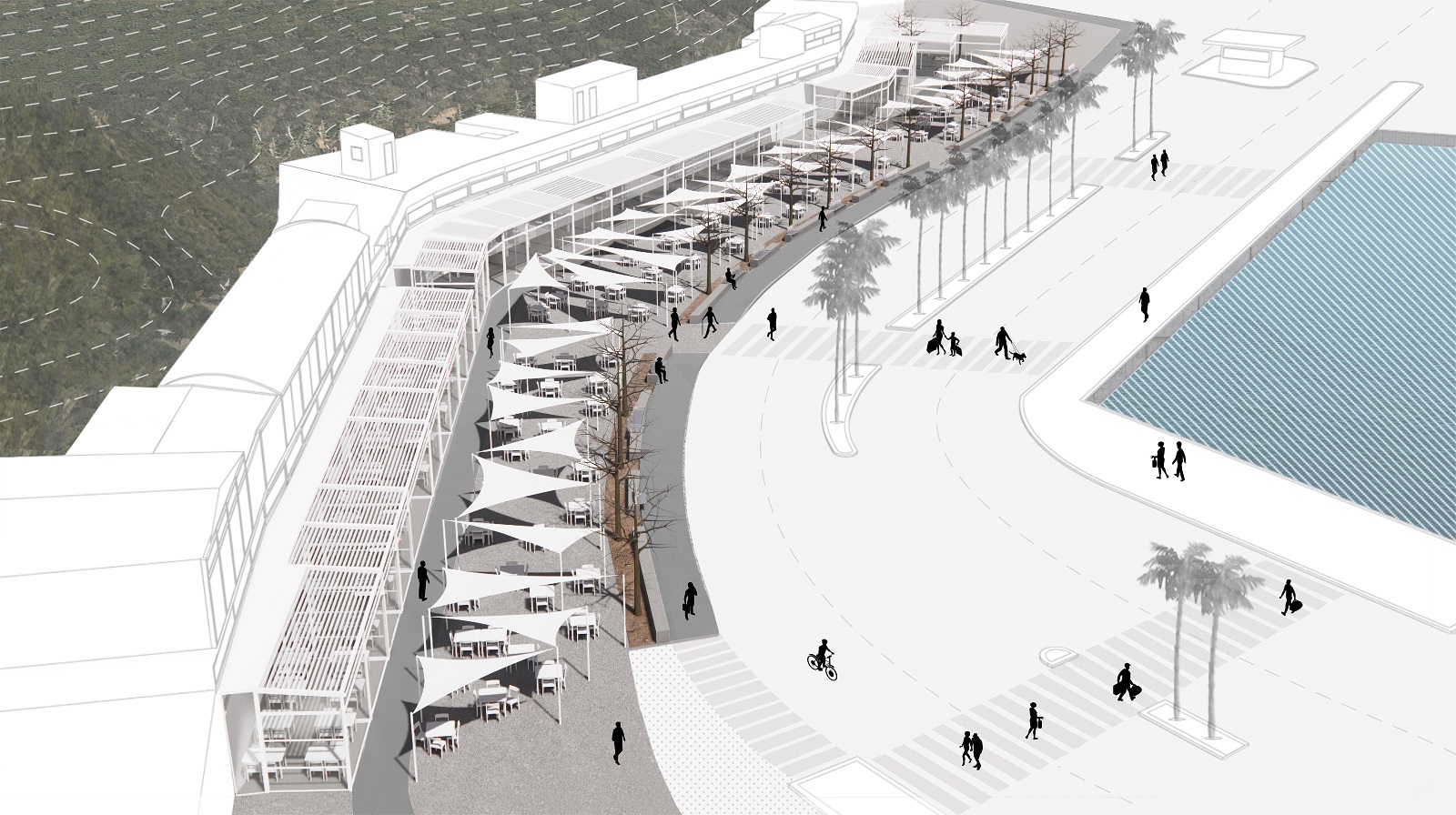
Γενική άποψη ανάπλασης | Φωτορεαλιστική απεικόνιση © Constantine Bouras Studio
“Η νέα σχεδιαστική προσέγγιση εστιάζει στη δημιουργία μίας ενιαίας κατασκευής που θα αναπτυχθεί παράλληλα με το κτηριακό συγκρότημα, επιτρέποντας να γίνει ξανά αντιληπτό το υφιστάμενο κτηριακό συγκρότημα ως μία ενιαία επιμήκης σύνθεση”.
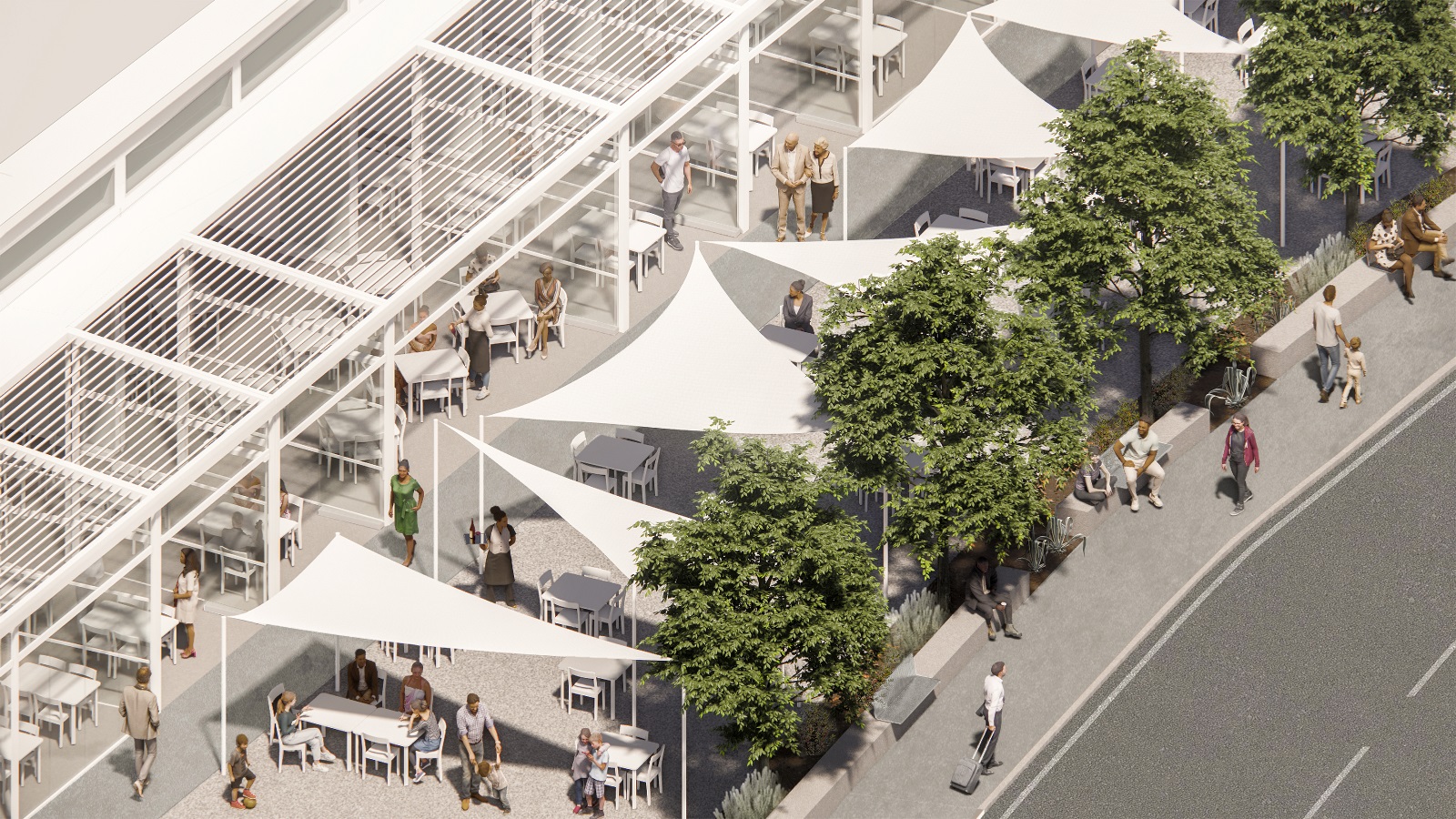
Αξονομετρική άποψη ανάπλασης | Φωτορεαλιστική απεικόνιση © Constantine Bouras Studio
Η νέα δομή θα είναι μία ελαφριά μεταλλική κατασκευή, με ναυτικές αναφορές και θα λειτουργεί ως ένα ελαφρύ, «διάφανο» στέγαστρο, μπροστά από το υπάρχον κτηριακό συγκρότημα. Η κάθε μονάδα στεγάστρου θα μπορεί να μεταβάλλεται από εντελώς ανοιχτή έως εντελώς κλειστή, ανάλογα με τις περιβαλλοντολογικές συνθήκες, μέσα από σύστημα περιστρεφόμενων μεταλλικών περσίδων, σύστημα αναδιπλούμενων υάλινων πετασμάτων και ανασυρόμενων τηλεσκοπικων κουφώματων. Το στέγαστρο δεν λειτουργεί ως εμπόδιο, αλλά ως φίλτρο – ένα υβριδικό όριο ανάμεσα στον δημόσιο χώρο και στις ιδιωτικές χρήσεις του κτηριακού συγκροτήματος.
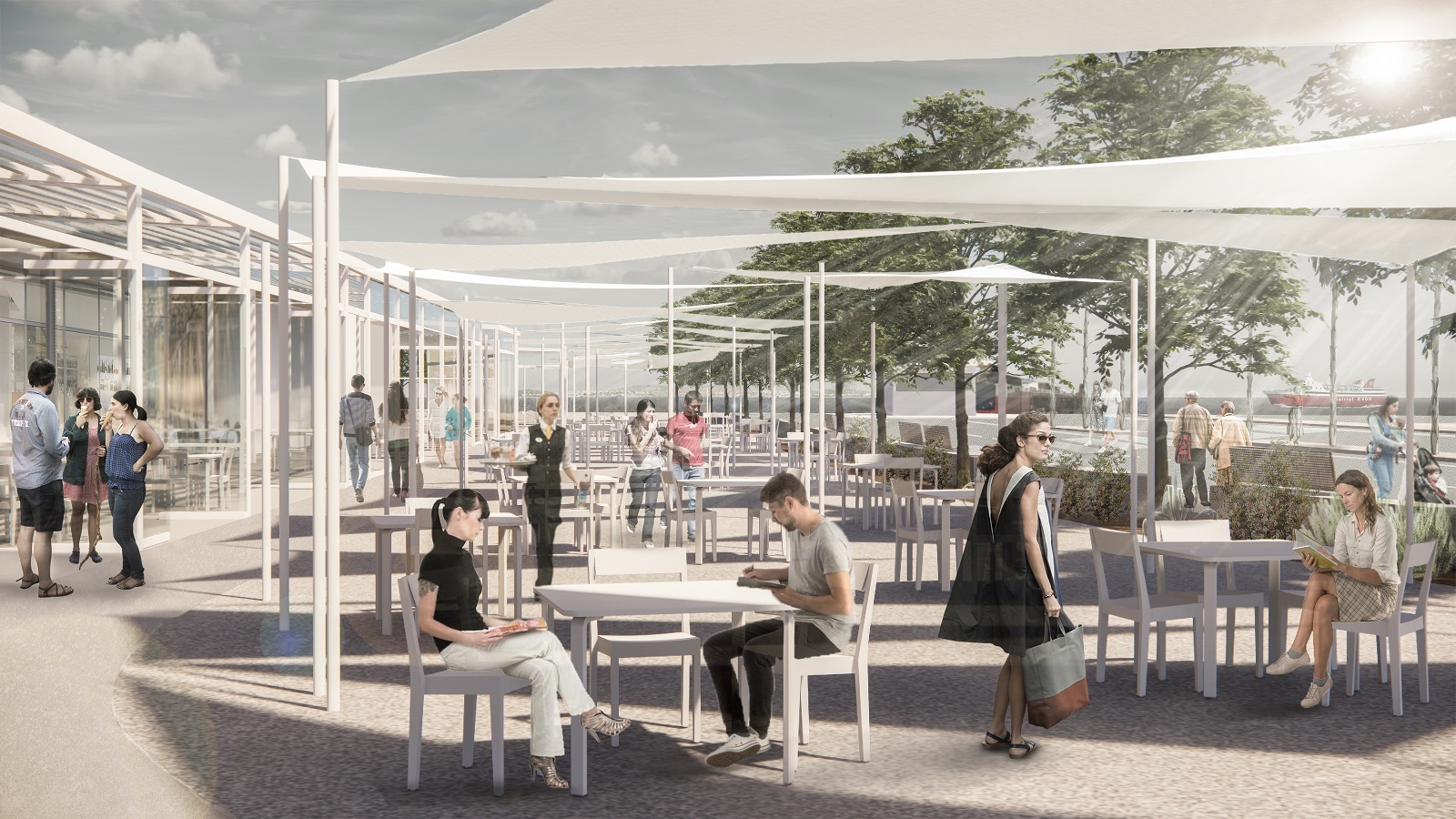
Άποψη υπαίθριου χώρου | Φωτορεαλιστική απεικόνιση © Constantine Bouras Studio
Σύμφωνα με τον νέο σχεδιασμό, ο χώρος που τώρα χρησιμοποιείται για τη στάθμευση των οχημάτων μετατρέπεται σε χώρο με δυνατότητα ανάπτυξης υπαίθριων τραπεζοκαθισμάτων από τα καταστήματα, με μια ευέλικτη διάταξη σκίασης, αποτελούμενη από λευκά υφασμάτινα σκίαστρα σε λεπτά λευκά υποστυλώματα, που παραπέμπουν στα πανιά και τα κατάρτια των ιστιοπλοϊκών σκαφών.Τα εφελκυόμενα σκίαστρα λειτουργούν ως ένα οπτικό σύνολο – αντιληπτό ως τέτοιο είτε σε κάποιον που κινείται προς το λιμάνι, ειδικά κατεβαίνοντας από το επίπεδο της πόλης προς την προκυμαία, είτε σε κάποιον που βρίσκεται κάτω από αυτά – σε μια ευέλικτη διάταξη, καθώς μπορούν να αφαιρεθούν, ανάλογα με την εποχή, ή να αλλάξουν γεωμετρία, ανάλογα με τις ανάγκες.
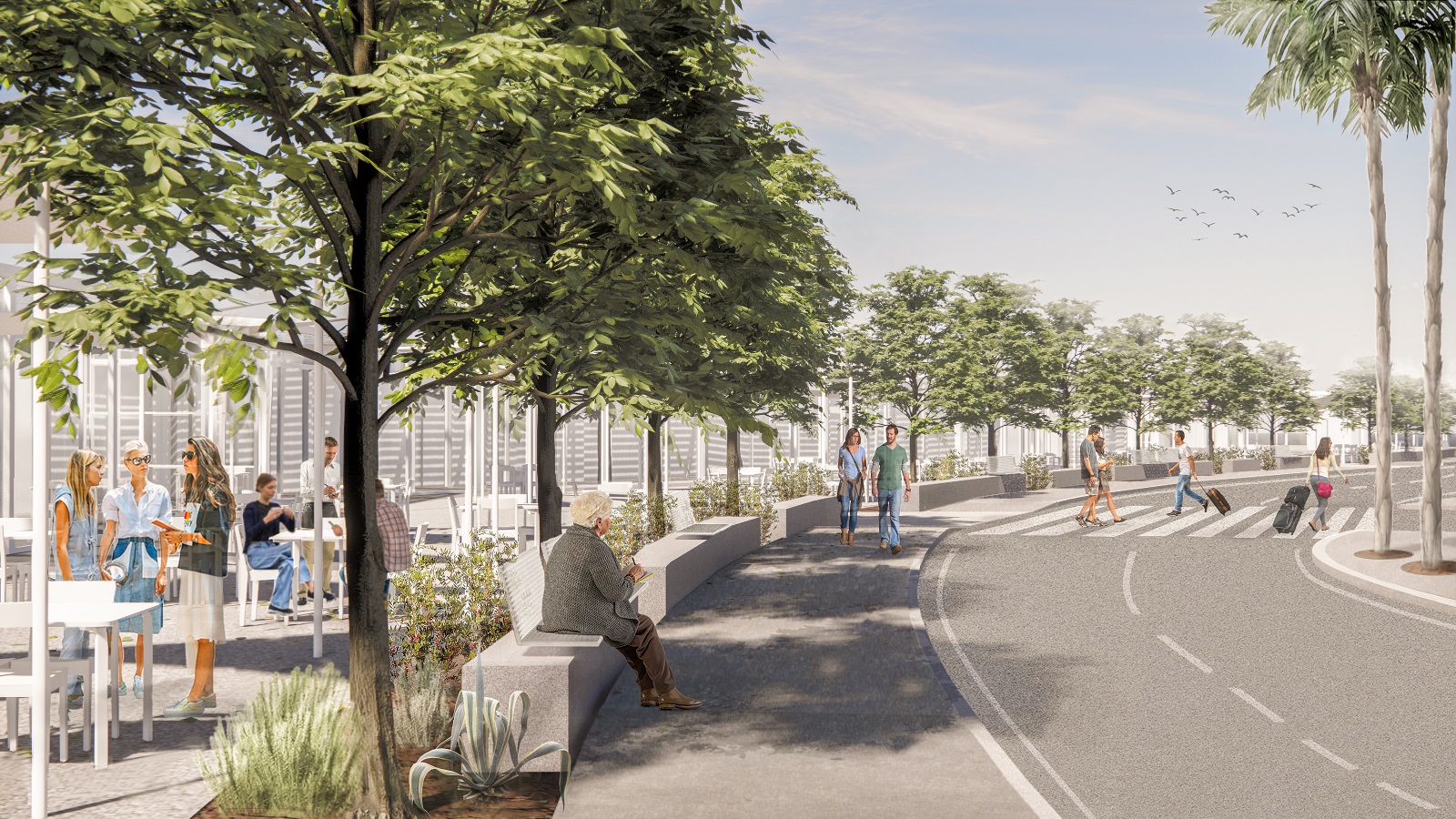
Άποψη πεζόδρομου | Φωτορεαλιστική απεικόνιση © Constantine Bouras Studio
“Ιδιαίτερη μέριμνα έχει δοθεί στη φύτευση, ως δομικό εργαλείο σκίασης και βιοκλιματικής διαχείρισης του χώρου”.
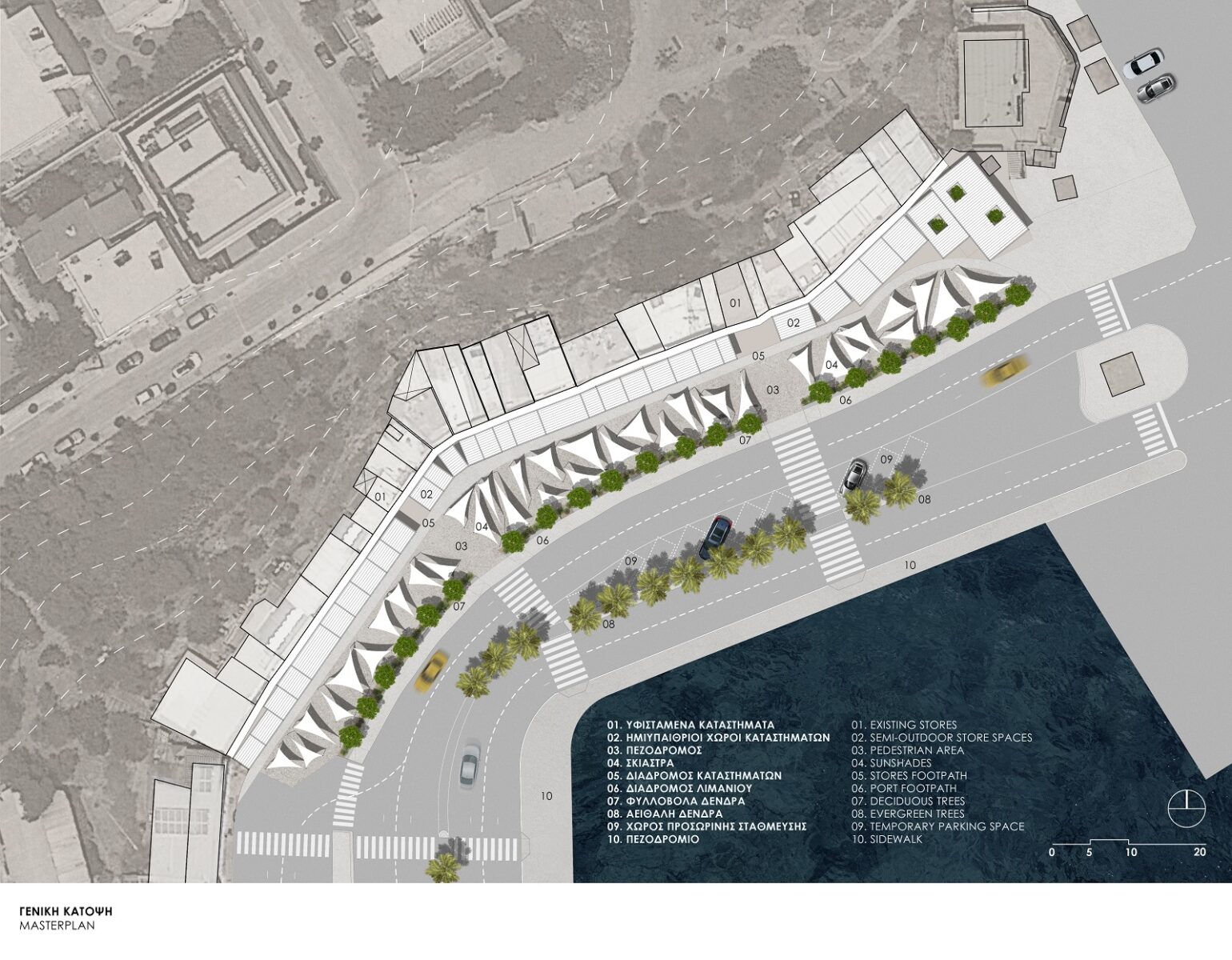
Γενική κάτοψη, © Constantine Bouras Studio
Κατά μήκος του πεζοδρόμου προβλέπεται η φύτευση Celtis australis, με στόχο τη δημιουργία γραμμικής σκίασης και ενός ευχάριστου μικροκλίματος, ιδίως κατά τους θερμούς μήνες. Ταυτόχρονα δημιουργουν σκίαση προς τον υπαίθριο χώρο εκτόνωσης των καταστημάτων με τα τραπεζοκαθίσματα, ενώ η φυλλοβόλος τους φύση επιτρέπει τον χειμώνα τη διείσδυση του χαμηλού ηλιακού φωτός στο εσωτερικό των καταστημάτων, λειτουργώντας συμπληρωματικά με το σύστημα σκίασης της μεταλλικής κατασκευής και ενισχύοντας τη συνολική ενεργειακή απόδοση των όψεων.
Η ανάπλαση θα αναβαθμίσει το παραλιακό μέτωπο της εισόδου του λιμανιού της Ραφήνας και θα συμβάλλει στη βιώσιμη ανάπτυξη της πόλης με την ανάδειξη του σε ένα πόλο στάσης με υπερτοπικό χαρακτήρα για το ευρύτερο κοινό που διακινείται μέσω του λιμανιού της.
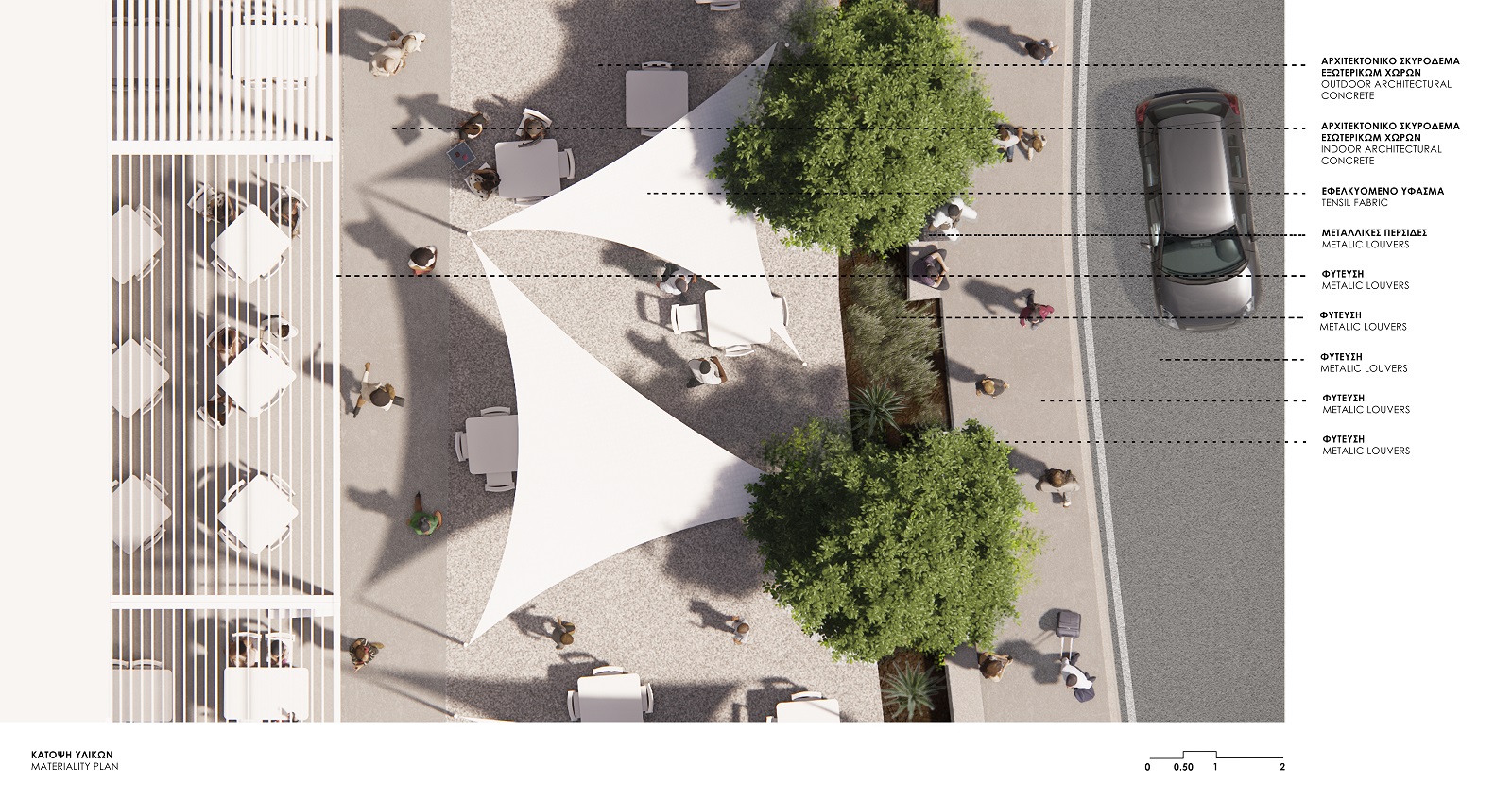
Κάτοψη υλικών, © Constantine Bouras Studio
Στοιχεία & Συντελεστές έργου:
Τίτλος έργου: Ανάπλαση Εμπορικής Ζώνης του Λιμένα Ραφήνας, Τυπολογία: Αστικός σχεδιασμός και αρχιτεκτονική καταστημάτων, Τοποθεσία: Ραφήνα – Ελλάδα, Αρχιτεκτονική Μελέτη: Constantine Bouras Studio, Στατική Μελέτη: Ηλιάνα Καραγιαννάκου, Η/Μ Μελέτη: Μιχάλης Ζαννής, Κατάσταση: Μελέτη σε φάση ωρίμανσης, Κείμενο παρουσίασης + φωτορεαλιστικές απεικονίσεις: Constantine Bouras Studio
English description: The entrance to the port of Rafina is a public space of highly symbolic and functional value, an intermediate place of transition and reception, connecting Attica with the island complex of the Cyclades.
With the imperative need to demolish the existing unauthorized, makeshift structures, the proposal of the architectural office Constantine Bouras Studio for the creation of a single structure is called upon to restore the architectural continuity of the existing building front [consisting of small units with common typological characteristics], by creating a continuous, aesthetically and functionally, zone of semi-outdoor and outdoor spaces along the pier of the coastal front of the Rafina port entrance.
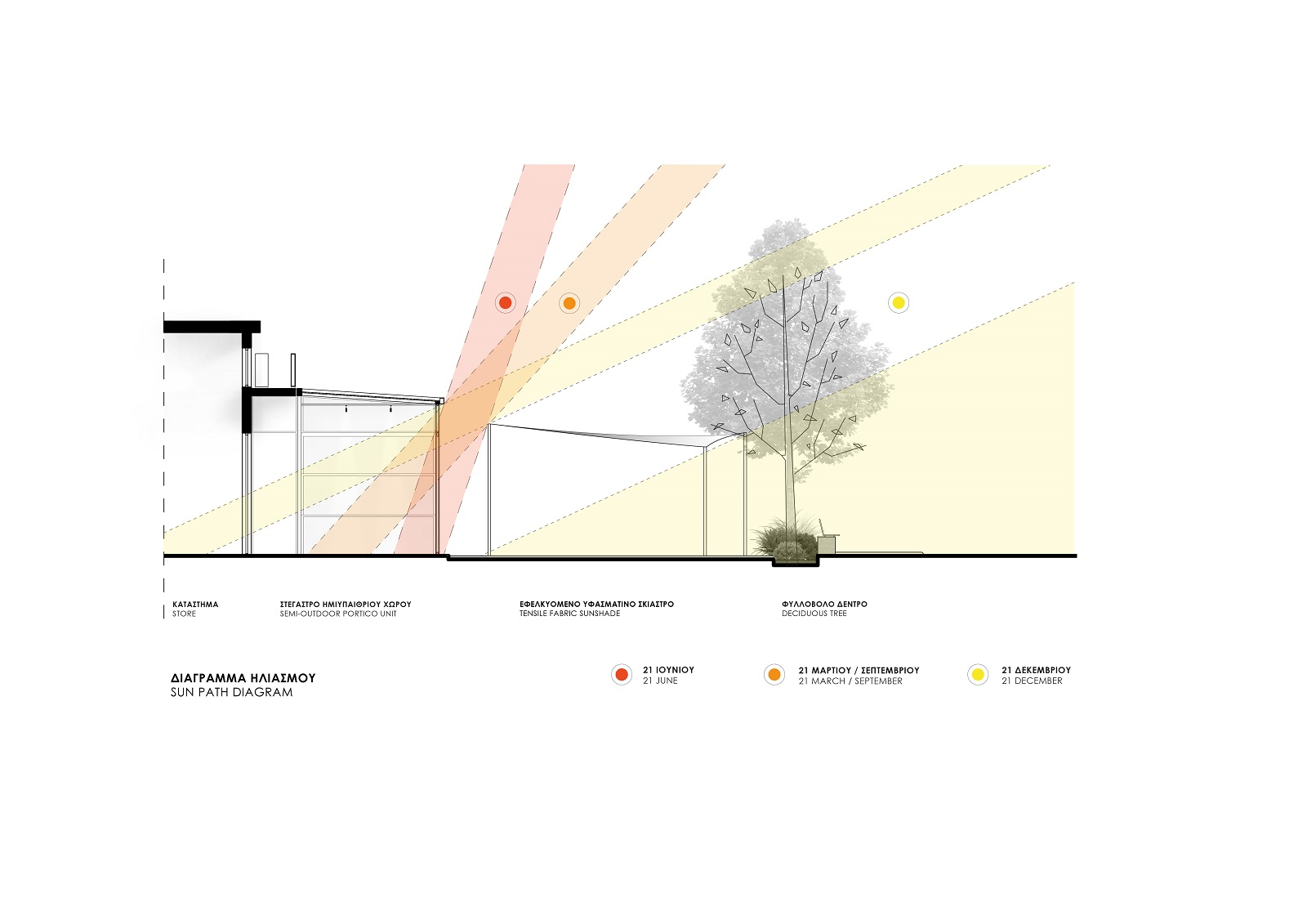
Sun path diagram, © Constantine Bouras Studio
“The new design approach focuses on the creation of a unified structure which will be deployed parallel to the existing building complex, allowing it to be perceived again as a single elongated composition”.
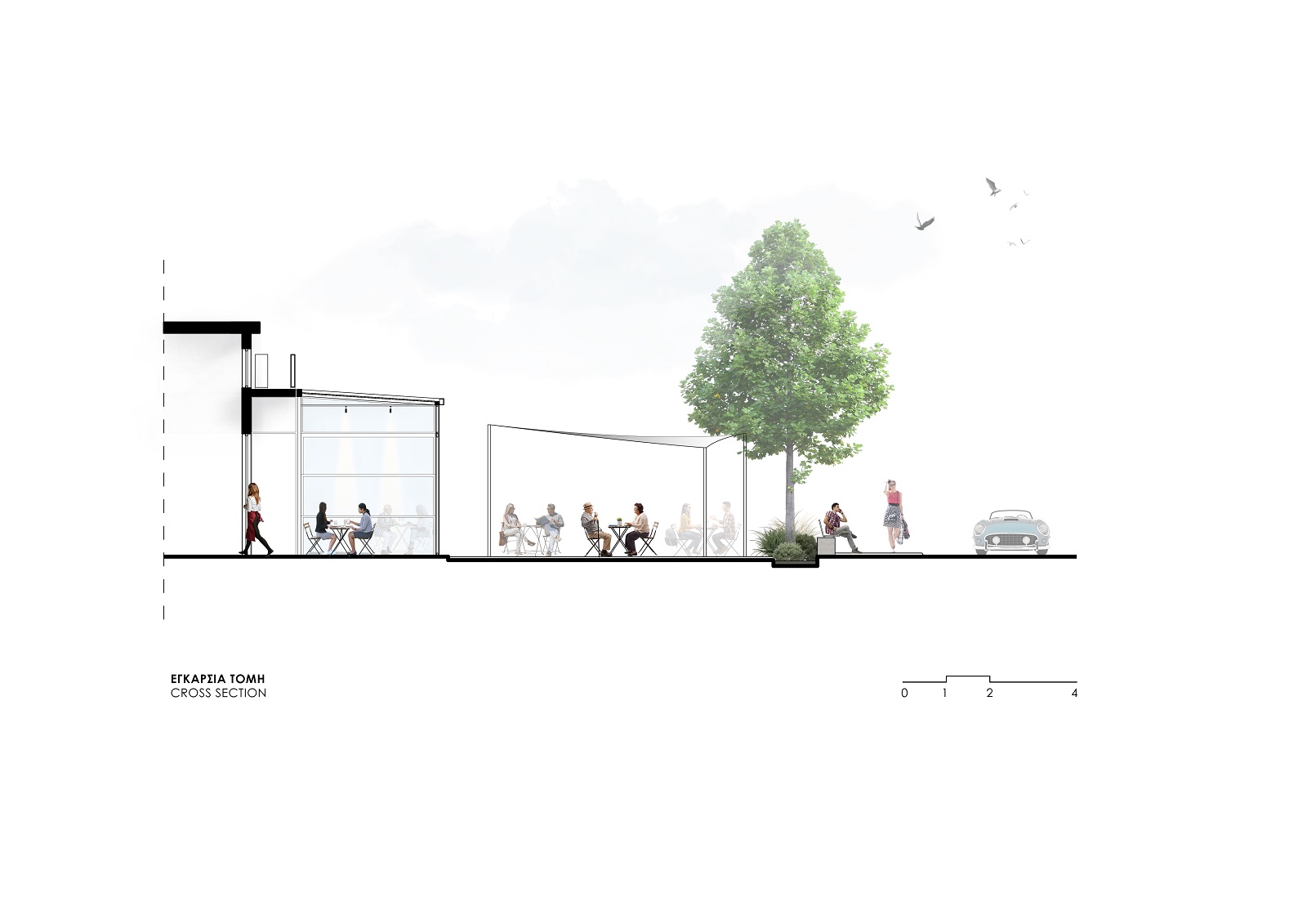
Cross section, © Constantine Bouras Studio
The new element will be a lightweight metal structure with nautical references, functioning as a light “transparent” portico in front of the existing building complex. Each portico unit will be adjustable, from fully open to fully closed, depending on weather conditions, through a system of rotating metal louvers, retractable glass panels and telescopic sliding frames. The porticos do not function as a barrier, but as a filter – a hybrid boundary between the public space and the private uses of the building complex.
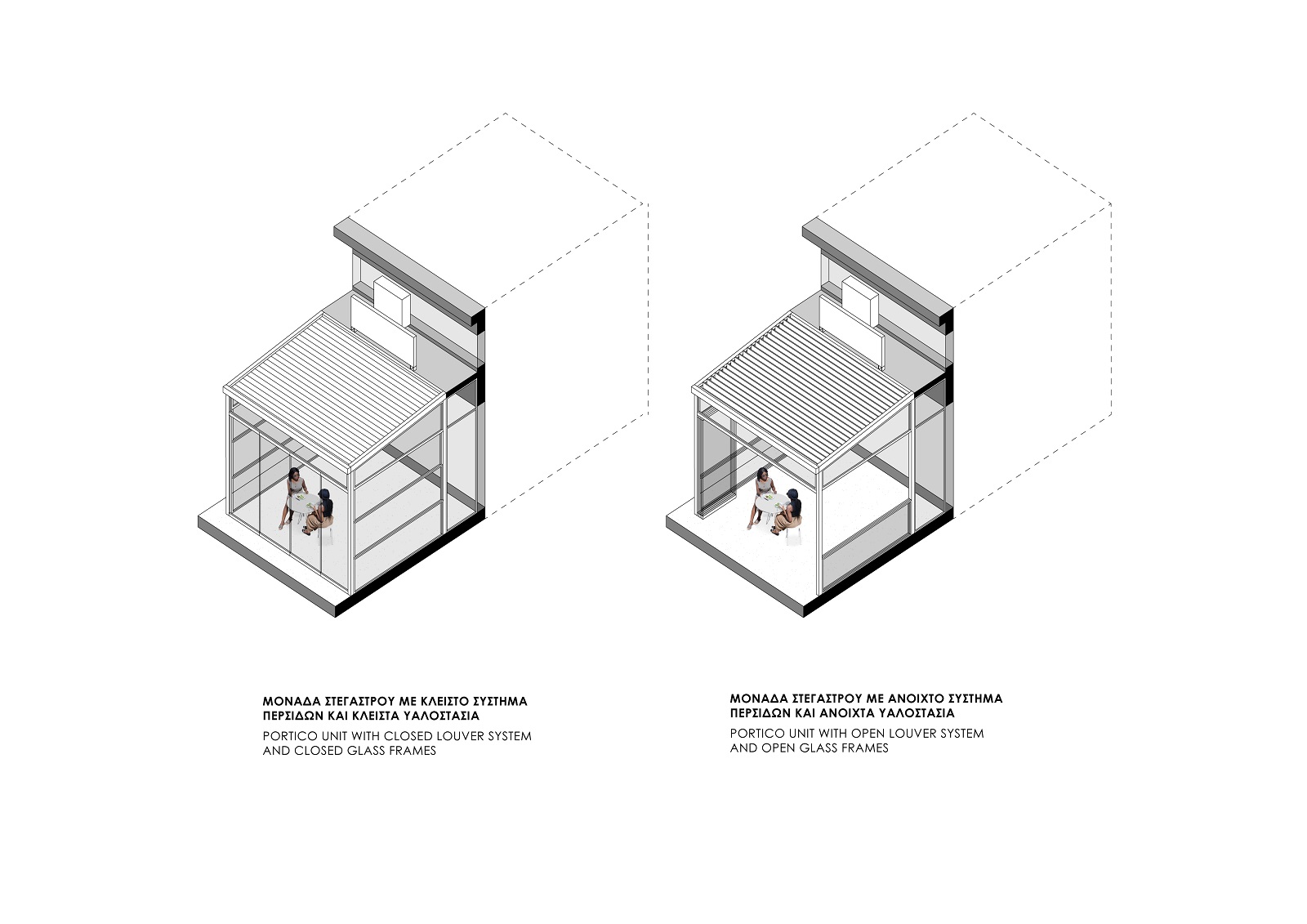
Axonometric of semi-outdoor spaces, © Constantine Bouras Studio
According to the new design, the space currently used for vehicle parking will be transformed into a space for restaurant outdoor seating, with a flexible shading arrangement, composed from white tensile fabric sunshades on fine white pillars, referencing the sails and masts of sailing boats. The retractable awnings will function as a visual whole – perceived as such either to someone moving towards the port, especially descending from the city level to the waterfront, or to someone below them – in a flexible arrangement, as they can be removed, depending on the season, or change geometry, depending on operational needs.
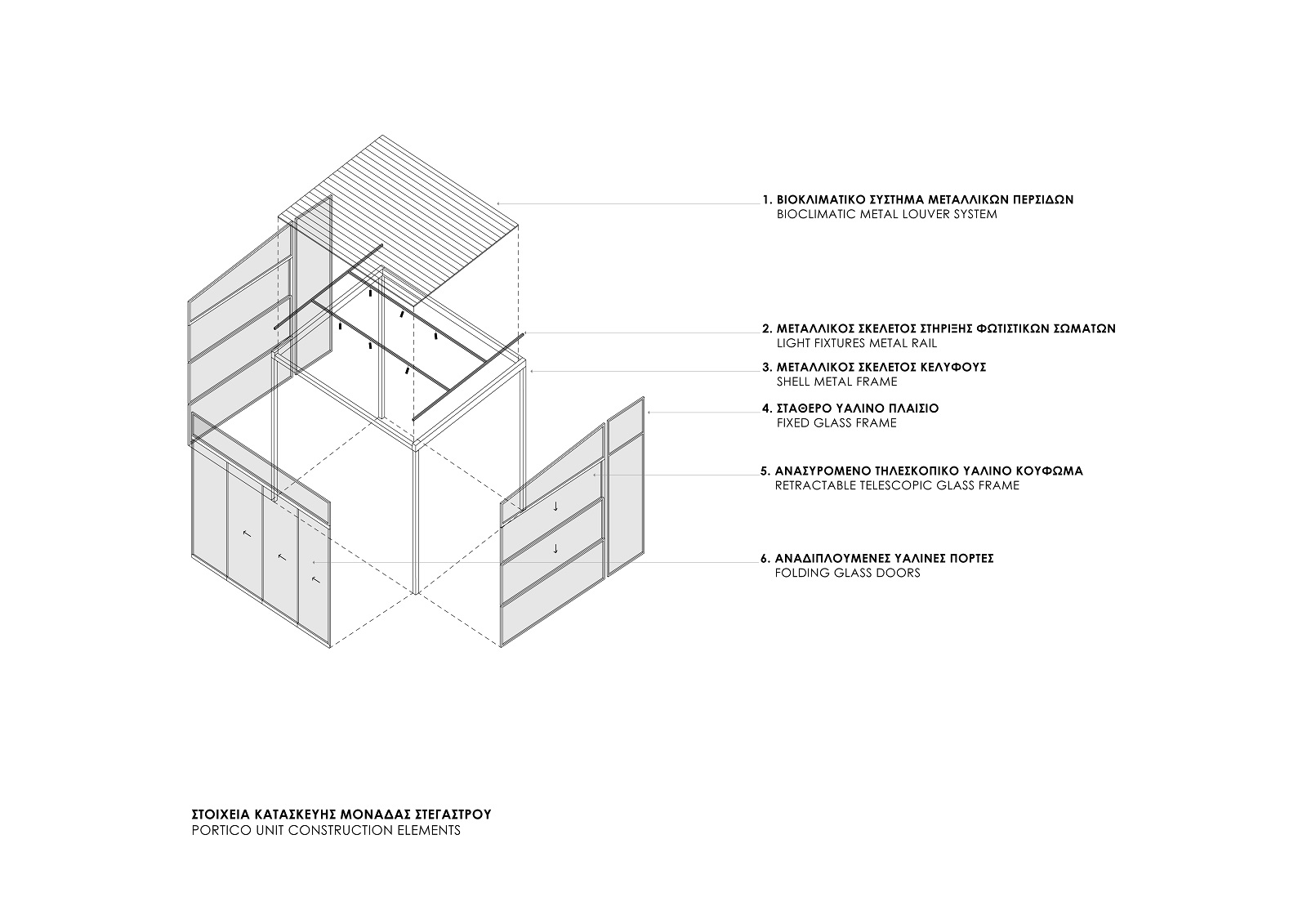
Exploded axonometric of semi-outdoor space, © Constantine Bouras Studio
“Particular attention has been attributed to planting as a structural tool for shading and bioclimatic management of the space”.
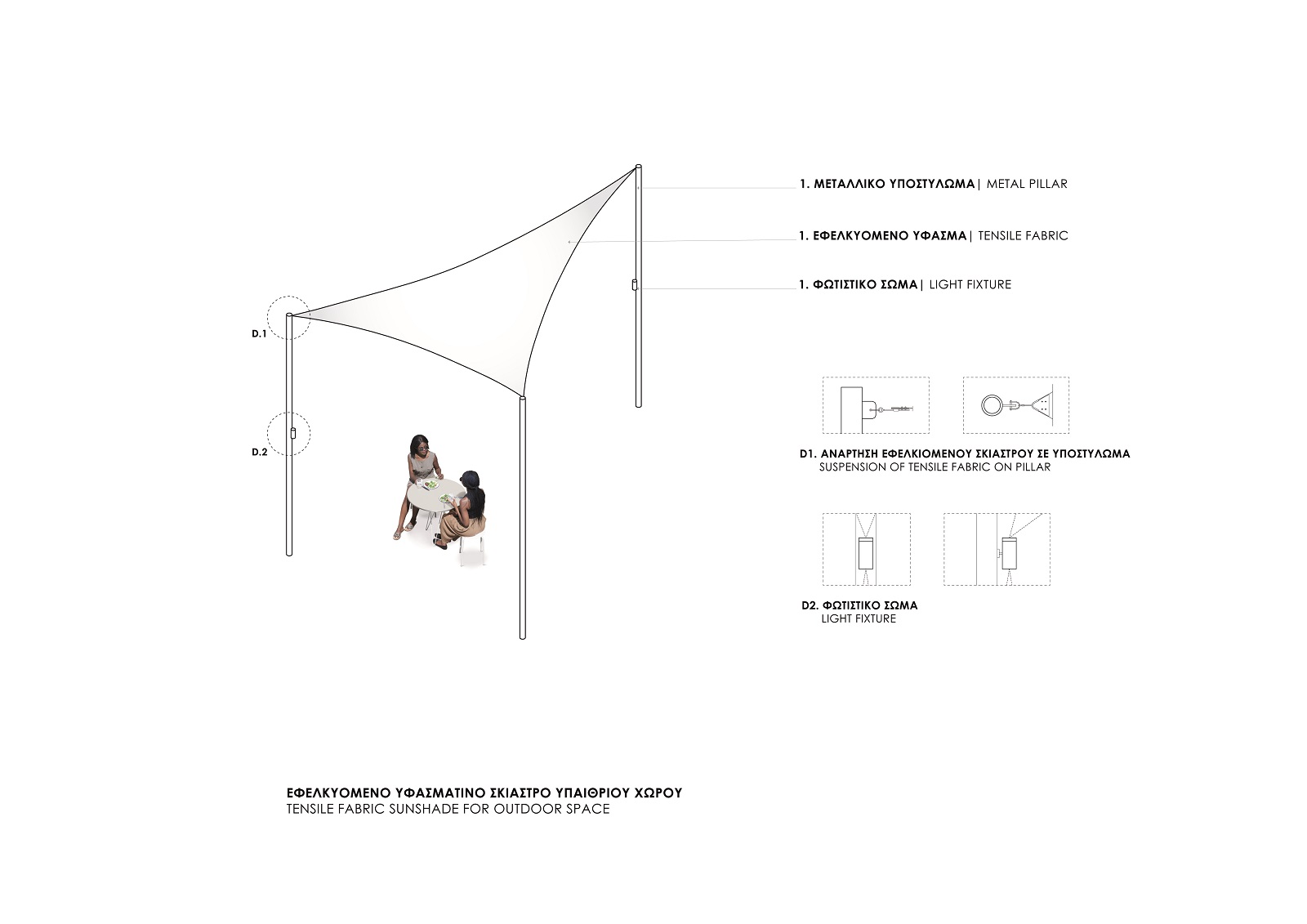
Diagram of outdoor space, © Constantine Bouras Studio
Celtis australis is planned to be planted along the sidewalk, with the aim of creating linear shading and a pleasant microclimate, especially during the warmer months. At the same time, these trees will create shade towards the outdoor area of the restaurants, while their deciduous nature will allow for the penetration of low sunlight into the interior of the stores during winter, functioning complementary to the shading system of the metal structures and enhancing the overall energy efficiency of the facades.
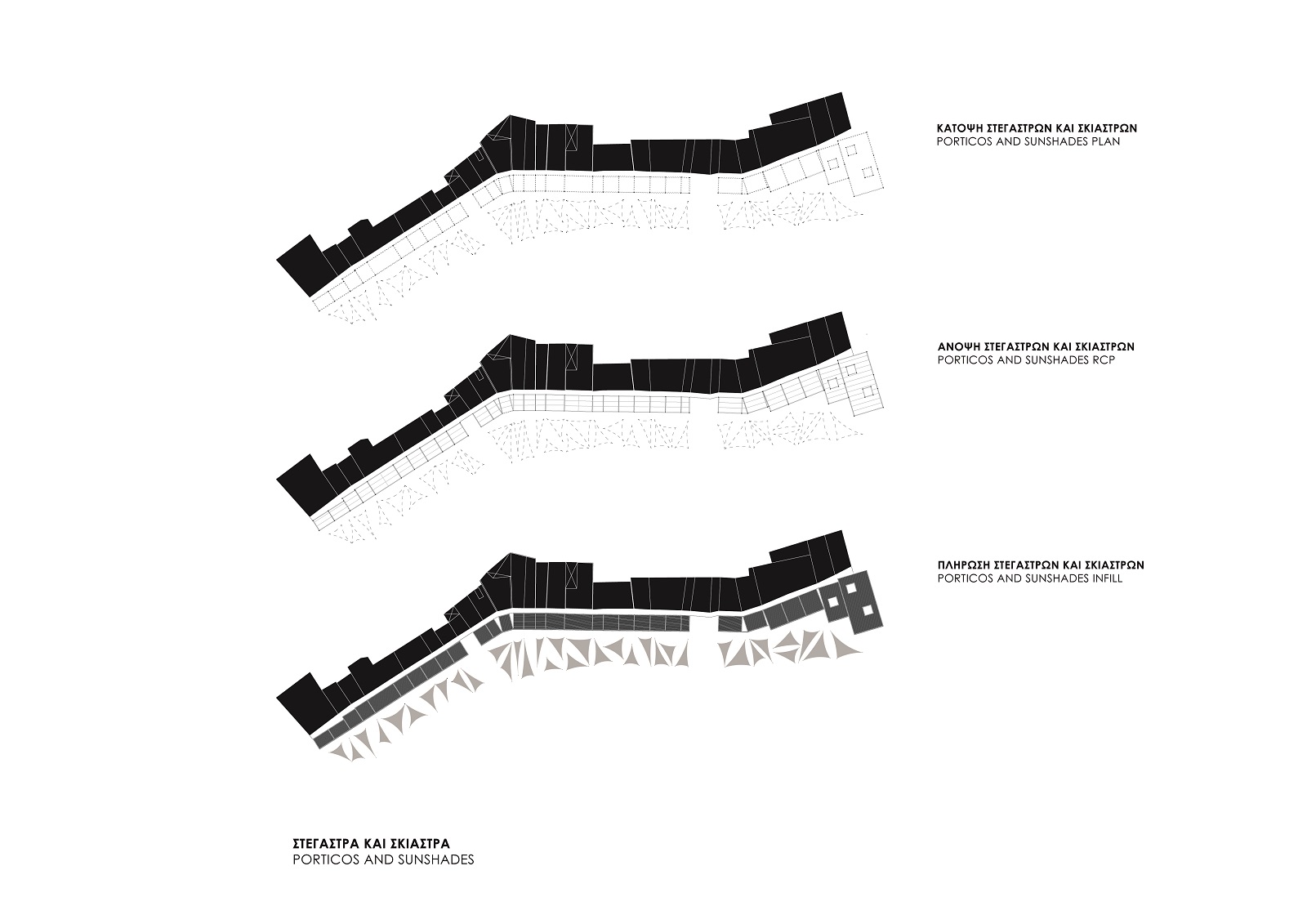
Porticos & Sunshades plans, © Constantine Bouras Studio
The redesign scheme will upgrade the coastal front of the Rafina port entrance and will contribute to the sustainable development of the city by making it a rest area with a translocal character for the wider public that travels through its port.
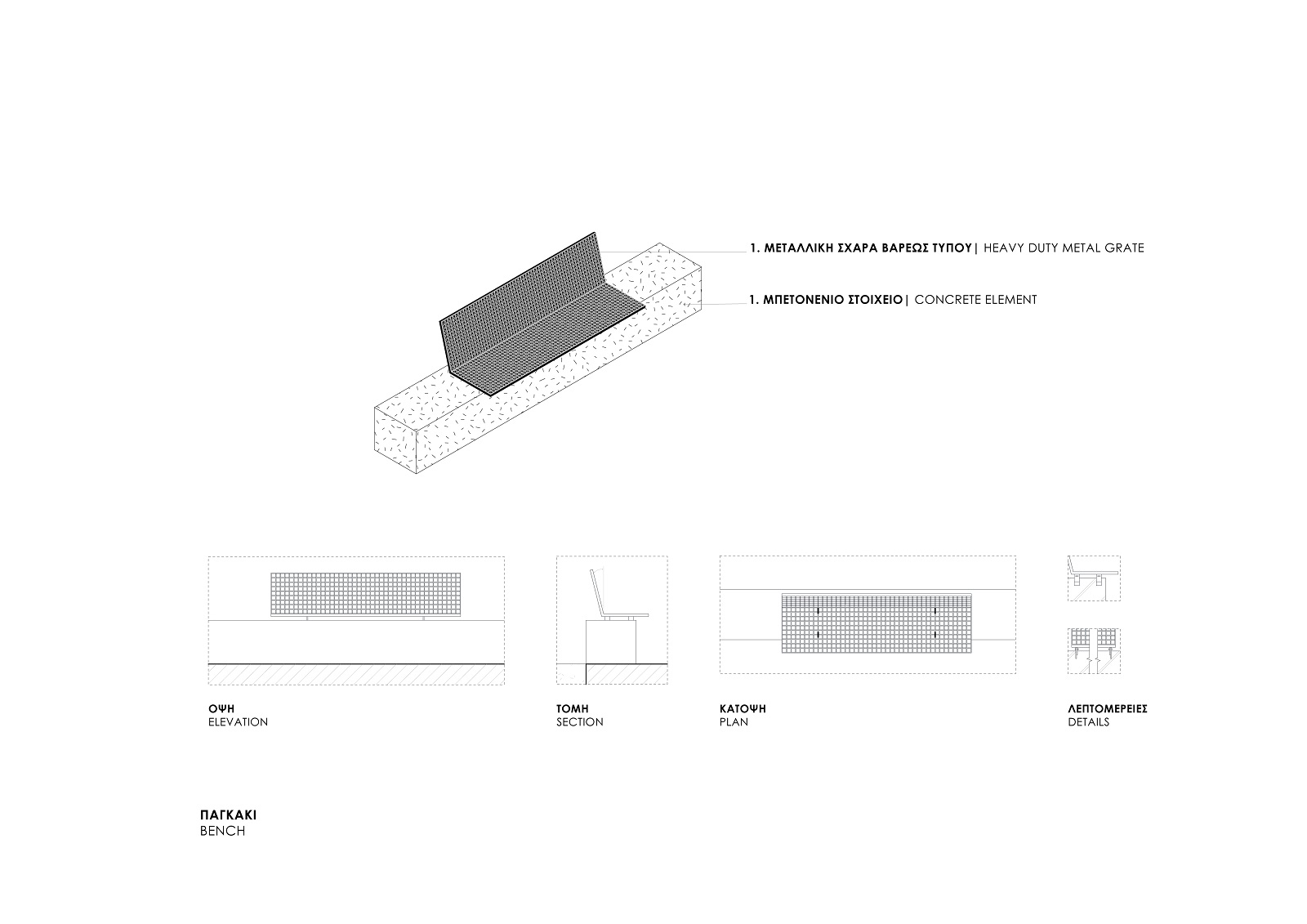
Rafina bench details, © Constantine Bouras Studio
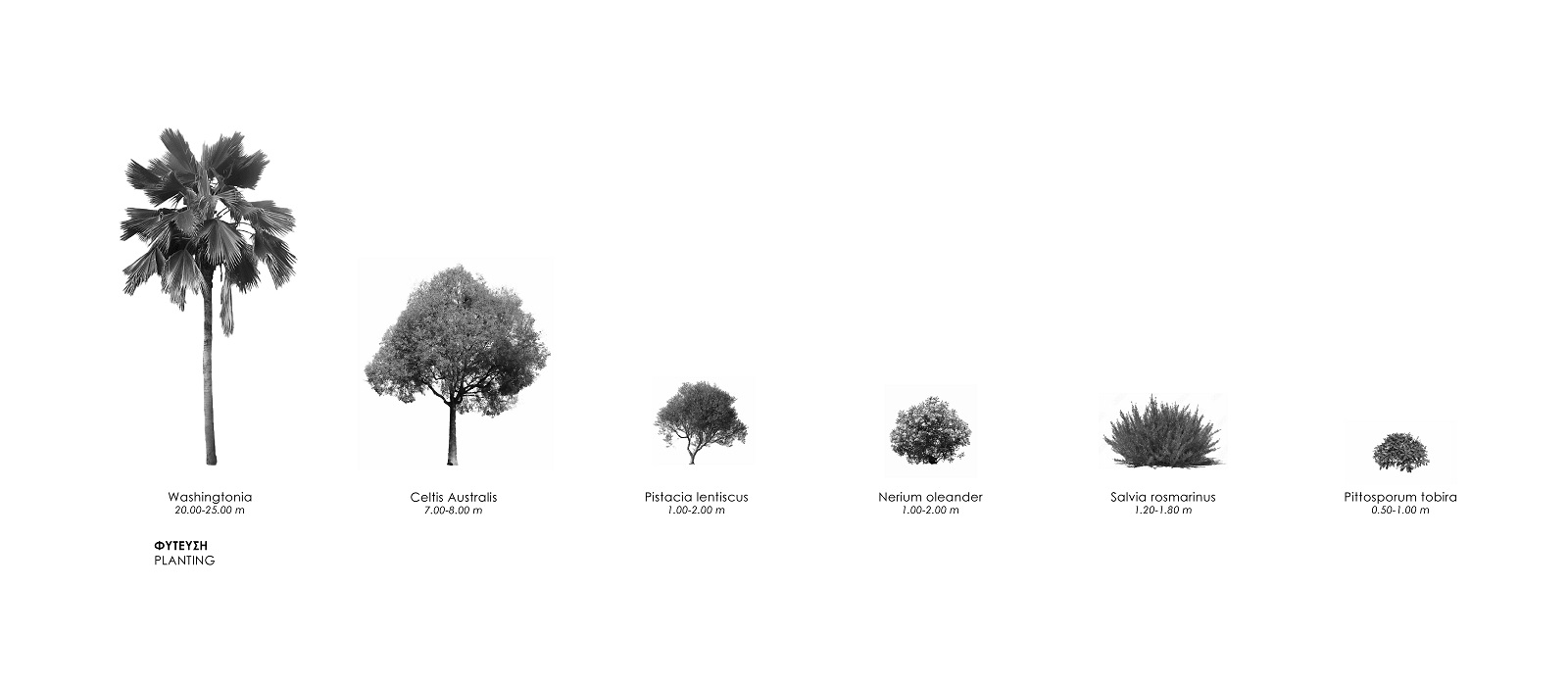
Rafina planting details, © Constantine Bouras Studio
Facts & Credits:
Project title: Rafina Port Commercial Zone Redesign, Typology: Urban design and retail architecture, Location: Rafina – Greece, Architectural Study: Constantine Bouras Studio, Structural Study: Iliana Karagiannakou, MEP Study: Michael Zannis, Status: Study in Design Development, Text description + 3D visualization: Constantine Bouras Studio